Spring peonies and garden peonies can both bring a romantic, abundant look to a wedding, but they are not opposites: “garden peony” usually describes a group of herbaceous peonies, while “spring peony” describes when a peony is flowering. For wedding planning, the useful distinction is between locally available, in-season blooms and cut flowers supplied from another growing region or season. Peonies are naturally spring-to-early-summer flowers, and their short, variable bloom window makes date, variety, and sourcing central to the design. Comparing bloom timing, flower form, availability, cost, and care can help couples choose a realistic plan—and a graceful backup—for wedding-day magic.
Garden peony identity and wedding-season timing
The American Peony Society describes garden peonies as cultivated peonies valued for their showy flowers and garden performance. In common horticultural usage, the term often refers to herbaceous peonies, whose stems die back in winter and regrow from underground roots. “Spring peony,” by contrast, is not a separate botanical category; it refers to peonies flowering in spring or to flowers marketed for a spring event. This distinction matters because garden-grown peonies are only one possible source of spring wedding flowers.
Peony flowering dates depend on climate, cultivar, and local conditions. The Royal Horticultural Society places the main flowering period for many herbaceous peonies in late spring to early summer, while growers in warmer or cooler regions may see earlier or later blooms. Consequently, a wedding date alone cannot guarantee local peonies. Ask a florist or grower about the expected harvest window for the specific variety and region.
Herbaceous garden peonies: classic seasonal flowers
Herbaceous peonies are perennial garden plants that die back above ground and return from the crown each year. Their large, layered blooms are popular for bouquets, ceremony arrangements, and centerpieces. Cultivars vary in color, fragrance, flower shape, and flowering date, so a local grower may offer several varieties across a relatively short harvest season rather than one continuous supply.
A garden-grown bloom is not automatically more durable or more suitable for an event than a commercially shipped bloom. Freshness, harvest stage, hydration, storage, and handling all affect vase life. The University of Minnesota Extension recommends planting peonies in well-drained soil and providing suitable light and airflow; those garden-care requirements also illustrate why a grower’s location and conditions influence what is available.
Other peony types and the meaning of “spring”
Peonies include herbaceous, tree, and intersectional types. Tree peonies have woody stems that persist above ground, while intersectional peonies, also called Itoh peonies, combine traits of herbaceous and tree peonies. These categories describe plant growth and breeding—not a guaranteed wedding-season supply. A florist may also use “spring peonies” simply to describe flowers suited to a spring palette or event, even if the stems were grown elsewhere.
This terminology leads to the practical question: are the desired flowers actually in season near the wedding, or will they need to be sourced through a wider supply chain?
Seasonal availability shapes peony sourcing
Peony availability is a regional and calendar-dependent attribute. Local garden peonies can offer a strong connection to place and season, but their supply is constrained by weather, cultivar, and harvest timing. Imported or out-of-region cut peonies can broaden the date range, but availability, shipping, and wholesale pricing may change with origin and demand. The USDA’s floriculture reporting tracks cut-flower production and sales as part of a broader U.S. horticulture industry, but there is no single national calendar that guarantees peonies for every wedding date.
Local garden-grown peonies
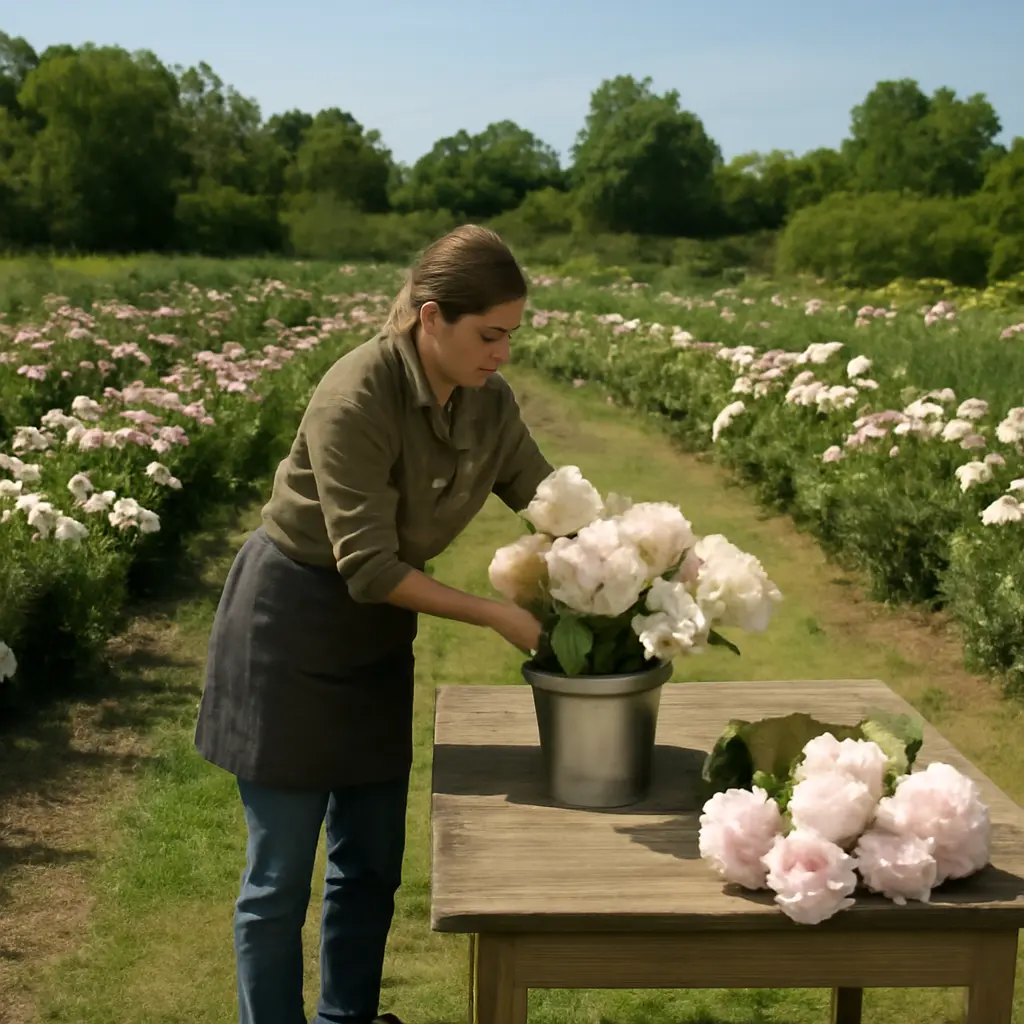
Local peonies are flowers grown near the event and harvested for the season. Their advantages may include shorter transport, a distinctive regional connection, and the opportunity to work directly with a farm. The main limitation is uncertainty: a warm spell can bring blooms forward, while cold or wet conditions can delay flowering or affect quality. Couples considering local stems should ask whether the grower can provide a firm quantity, what substitutions are possible, and when a final availability decision will be made.
Florist-sourced and imported peonies
Florist-sourced peonies may come from domestic growers, wholesalers, or international farms, depending on the date and market. Sourcing beyond the local season can make peonies possible for more dates, but it does not make supply or price certain. Ask the florist to identify the expected origin, stem grade, delivery timing, and contingency plan; these details are more informative than a general promise that peonies will be available.
Price, quantity, and contingency planning
Peony prices fluctuate with seasonality, grade, origin, and market demand, so a universal per-stem figure would be misleading. Their large blooms can create visual impact with fewer stems than a smaller flower, but a lush bouquet or installation can still require substantial quantities. Request a quote based on the exact design, confirm whether substitutions require approval, and agree on a backup flower in a similar color and shape. Garden roses, ranunculus, and double tulips can provide a related romantic effect, subject to local availability.
A simple planning chart can help: list the wedding date, local harvest estimate, confirmed source, minimum guaranteed quantity, and backup option. Treat the grower’s forecast as a planning estimate, not a promise, until the flowers are harvested and inspected.
Flower form and design create the wedding-day effect
Peonies are prized for their rounded silhouettes and varied petal arrangements. The American Peony Society recognizes flower forms that include single, Japanese, anemone, semi-double, and double types. These categories offer different visual effects, from open centers that reveal stamens to densely layered blooms that read as soft, full focal flowers.
Choosing color, shape, and fragrance
A peony’s cultivar determines much of its color, form, and scent. White, blush, pink, coral, and red varieties can support different palettes, while flower form affects whether an arrangement feels airy or abundant. Fragrance also varies by cultivar; do not assume every peony will smell strongly. For a dependable design, ask to see the named variety or a representative image and clarify whether substitutions may differ in color, form, or scent.
Matching peonies to bouquets and installations
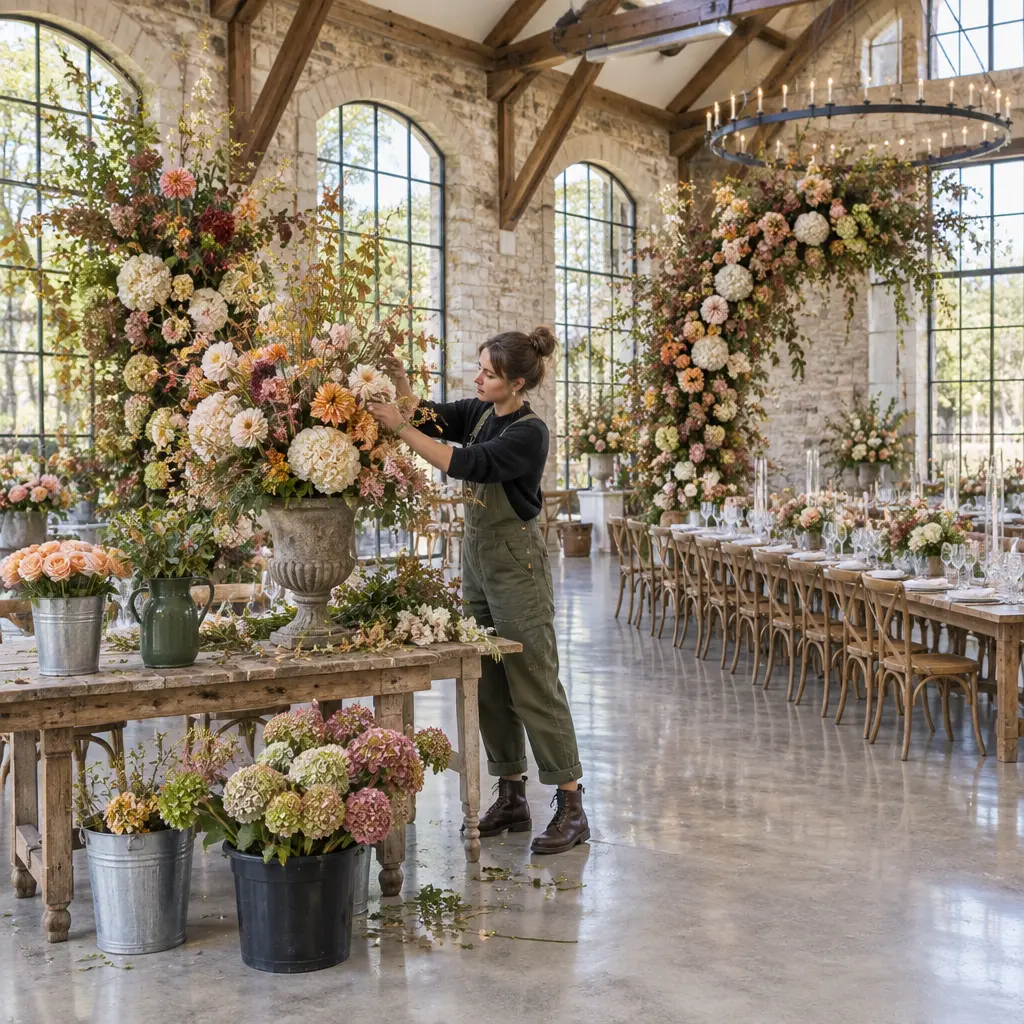
Large peony heads work well as focal blooms in bridal bouquets and can add volume to centerpieces. They also pair naturally with smaller flowers and foliage, which can stretch a limited supply and provide texture. For installations, confirm stem strength, mechanics, and the conditions at the venue; delicate open blooms may be less appropriate for arrangements exposed to heat, wind, or direct sun.
A practical wedding example
For a late-spring wedding near a peony farm, a couple might reserve locally grown blush peonies for the bouquet and ceremony focal points, then use roses and seasonal greenery elsewhere. If the farm’s harvest advances or falls behind, the florist can preserve the palette with agreed-upon substitutes. For a wedding outside the local bloom window, the same design can be adapted with sourced peonies if the budget and supply allow—or recreated with other flowers that offer a similar rounded, layered shape.
Handling and care protect peonies on the wedding day
Cut peonies are often harvested while the buds are still tight, allowing them to open after conditioning. The University of Massachusetts Amherst Extension’s cut-flower guidance emphasizes clean tools, clean containers, and appropriate postharvest handling as important practices for floral quality. A florist should manage the exact conditioning process, because the best stage and storage conditions depend on the shipment and event schedule.
Bud stage and opening time
A tight bud can travel and store differently from a fully open bloom, but it may not open in time if delivered too early or kept too cool. Conversely, an open flower can be vulnerable to bruising and may have a shorter display window. Ask the florist how the stems will be conditioned and what bloom stage is expected for the ceremony, photographs, and reception.
Temperature, water, and transport
Peonies should be protected from dehydration, crushing, and excessive heat during transport and setup. Keep arrangements away from direct sun and hot vehicle interiors, and avoid placing bouquets where guests may bump the blooms. The florist should determine appropriate storage and hydration practices; event staff should not leave cut flowers in a parked car or in a warm room for extended periods.
Conclusion: choose peonies by date, source, and design
Garden peony describes a horticultural group, while spring peony usually describes flowering season or event timing. Local garden-grown stems can offer seasonal character, but their short and weather-sensitive window makes availability uncertain. Sourced peonies may extend the options, with price and supply dependent on date, origin, and market conditions. Flower form, cultivar, conditioning, and a realistic backup plan matter just as much as the label.
Before booking, share your wedding date, palette, and floral priorities with a local grower or florist. Confirm the expected source and quantity, ask how substitutions will be handled, and build a design that remains beautiful if the peony forecast changes. For further reading, consult the American Peony Society’s flower-form resources and your regional university extension’s peony and cut-flower guidance.
Sources: American Peony Society, Peony Flower Forms, https://americanpeonysociety.org/learn/peony-flower-forms/; Royal Horticultural Society, Peonies: Growing Guide, https://www.rhs.org.uk/plants/peony/growing-guide; University of Minnesota Extension, Growing Peonies, https://extension.umn.edu/flowers/peonies; U.S. Department of Agriculture, Floriculture Crops 2023 Summary, https://www.nass.usda.gov/Publications/Todays_Reports/reports/floran24.pdf; University of Massachusetts Amherst Extension, Postharvest Handling of Cut Flowers, https://ag.umass.edu/greenhouse-floriculture/fact-sheets/postharvest-handling-of-cut-flowers.