
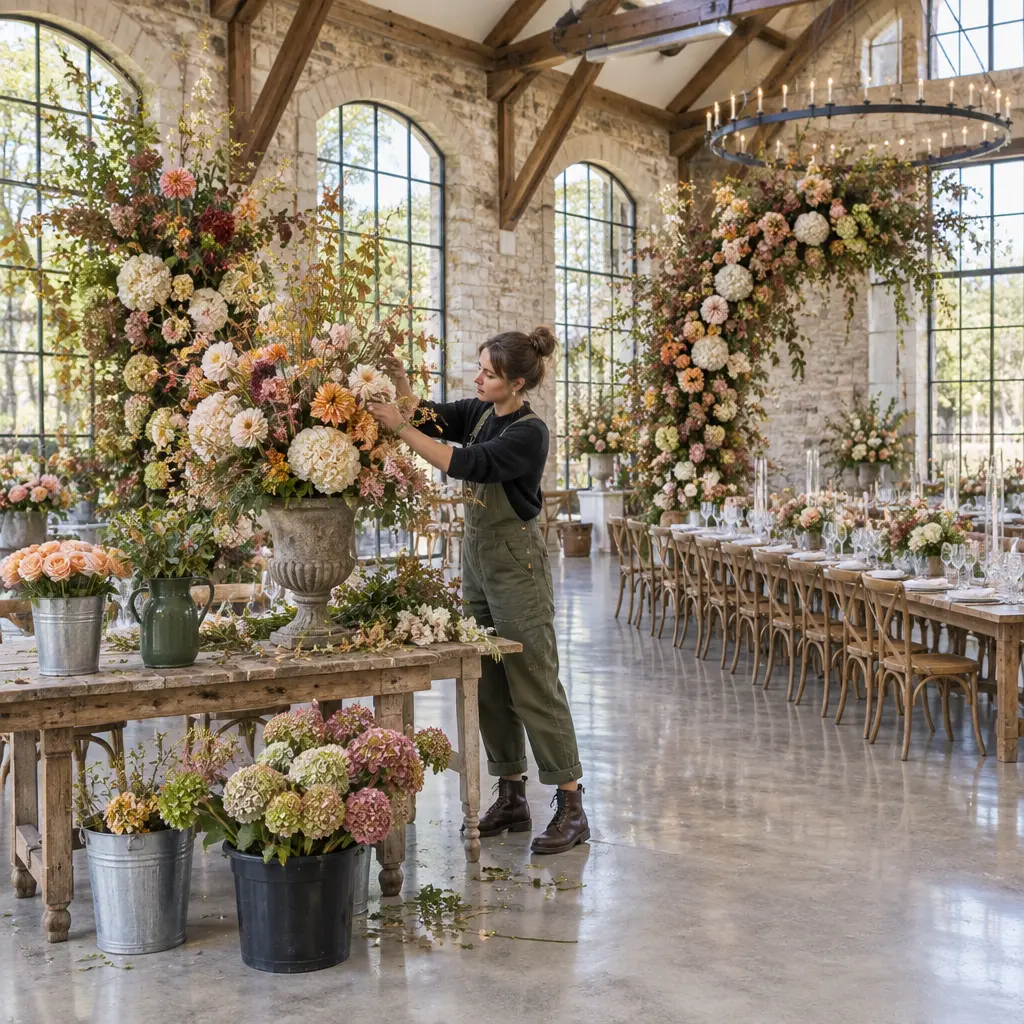
Luxury wedding florals are the intentional use of flowers, foliage, and botanical materials to shape a celebration’s atmosphere, setting, and visual identity. For 2027, the strongest direction is not one fixed flower or palette but a more personal, place-aware approach: sculptural arrangements, seasonal sourcing, expressive color, immersive installations, and designs that can be reused or repurposed. These shifts build on a durable market: The Knot’s 2024 Real Weddings Study reported that U.S. couples spent an average of $2,723 on wedding flowers, while floral design increasingly serves as both décor and a defining guest experience. The trends below are best read as emerging directions—not guaranteed predictions—and should be adapted to a couple’s venue, season, budget, and values.
How Personalization Is Shaping Luxury Wedding Floral Design
Personalized floral design means selecting and arranging botanical materials to express a couple’s story, rather than applying a standard wedding look. Wedding planner and designer resources commonly describe cohesive design as a combination of palette, setting, scale, and personal details; in practice, florists translate those inputs into flower choices, arrangement forms, and installation plans. For 2027, personalization is likely to show up in distinctive color, locally meaningful ingredients, and flowers used to transform the experience of a space.
Color Stories Beyond a Single Palette
A color story is a coordinated range of hues and tonal contrasts that links flowers to linens, attire, lighting, and architecture. Rather than relying only on a tightly matched set of pale neutrals, couples are embracing layered palettes: tonal burgundy and plum, citrus shades with leafy greens, or soft blush contrasted with deep red. Pantone’s Color of the Year announcements can influence design conversations, but they do not determine wedding trends; the strongest palette is one that suits the venue and photographs well in its actual light. Florists can test combinations with sample blooms or reference boards before ordering.
Seasonal and Place-Specific Flowers
Seasonal floral design prioritizes flowers available in the wedding’s region and season, while place-specific design connects those ingredients to local landscape and culture. The U.S. Department of Agriculture’s National Agricultural Statistics Service tracks domestic floriculture production, and the availability of particular crops varies by location and growing cycle. A local-first brief may include garden roses, native foliage, orchard branches, or regional wildflowers where appropriate and permitted. Because no single flower is reliably available everywhere, couples should ask their florist to suggest substitutions that preserve color, shape, and mood if weather or supply changes affect the original plan.
Meaningful Details and Botanical Storytelling
Botanical storytelling uses flowers and related materials to reference family, heritage, a shared place, or a couple’s history. Examples include incorporating a relative’s favorite bloom, using herbs associated with a family recipe, or choosing foliage reminiscent of a meaningful landscape. This approach is most effective when it is legible but restrained: a few purposeful details can communicate more than adding symbolic elements to every arrangement. Florists should also confirm that sentimental materials are safe, suitable for the venue, and available in sufficient quantity.
How Sculptural Installations Are Expanding Luxury Wedding Florals
Sculptural floral design treats arrangements as three-dimensional compositions, using line, mass, negative space, and movement to shape a room. The American Institute of Floral Designers’ professional education and design resources emphasize composition principles such as balance, proportion, rhythm, and focal emphasis. These principles support a shift from simply placing flowers on surfaces to creating visual landmarks—especially around ceremony structures, dining spaces, and entrances.
Grounded and Garden-Inspired Arrangements
Grounded arrangements sit low on the floor or near the ground, creating an abundant garden effect without the conventional height of a pedestal design. They can soften a ceremony aisle, frame a stage, or form a low border around a dining area. Their practical requirements matter: designers need to preserve clear routes for guests and staff, keep flowers away from candles and heat sources, and ensure arrangements do not obstruct accessibility. A useful planning graphic would compare guest sightlines and circulation paths before and after placement.
Suspended Florals and Architectural Focal Points
Suspended florals are installations hung above a ceremony or reception area, often from a truss, ceiling point, or purpose-built frame. They can make a large room feel intimate and draw attention upward, but their design requires engineering coordination. Venue approval, load limits, rigging access, fire-safety rules, and installation schedules should be confirmed before a floral concept is finalized. The International Association of Venue Managers and individual venues provide operational guidance, but the venue’s own written requirements take precedence.
Statement Blooms and Oversized Forms
Statement blooms are flowers or branches selected for unusual scale, silhouette, or visual impact. A single dramatic stem, an oversized botanical form, or a deliberately asymmetrical arrangement can serve as a focal point while reducing the need to fill every surface. This approach reflects a broader design principle: concentration can create impact more efficiently than uniform abundance. The florist should assess bloom durability, transport needs, and the viewing distance so that a statement arrangement reads clearly both in person and in photographs.
How Immersive Floral Design Connects Flowers to the Guest Experience
Immersive floral design uses botanical elements to influence how guests move through and perceive an event. Flowers may mark a transition from arrival to ceremony, frame a dining room, or create a memorable focal point for portraits. This direction is consistent with the broader experience-led wedding format documented by The Knot, where couples invest across multiple vendor categories to shape the celebration. Floral design can contribute to that experience, but it works best when coordinated with lighting, furniture, and the venue’s architecture.
Floral Entrances and Ceremony Environments
A floral entrance is a designed threshold that signals a change in setting or mood. It may use a floral arch, doorway installation, aisle markers, or a sequence of smaller arrangements. Ceremony florals are most successful when they balance visual presence with practical needs: unobstructed views, safe paths, and appropriate placement for the officiant and wedding party. If ceremony arrangements are intended for reuse, the florist should design them to be moved without damaging flowers or disrupting the schedule.
Dining Florals and Tabletop Composition
Tabletop floral design combines centerpieces, vessels, candles, place settings, and table linens into one composition. Low arrangements encourage conversation across a table, while taller designs can add vertical drama if they do not obstruct sightlines. The Knot’s 2024 Real Weddings Study reported an average U.S. wedding guest count of 115, a reminder that floral plans must account for table count and room scale rather than focusing only on a single showcase table. Couples should request a sample table or scaled layout to check how flowers, serviceware, and lighting work together.
Floral Photo Moments
A floral photo moment is a deliberately composed setting for portraits, such as a flower-framed seating area or a patterned botanical backdrop. Its success depends on placement, lighting, and guest flow as much as flower quantity. A backdrop near a busy entrance may create congestion; a better location allows guests to approach, pause, and leave without crossing service routes. Designers can also consider how the installation will appear in wide shots and close portraits, then use a small number of well-placed focal elements to avoid visual clutter.
How Sustainability Is Influencing Luxury Wedding Floral Choices
Sustainable floral design aims to reduce avoidable environmental and material impacts while maintaining the desired aesthetic. It can involve seasonal sourcing, careful ordering, reusable mechanics, foam-free construction, and donation or repurposing plans. The U.S. Environmental Protection Agency’s waste hierarchy places source reduction and reuse ahead of disposal, making advance planning a practical part of responsible design. Sustainability claims should be specific: “locally sourced,” for example, is more informative when the florist explains the sourcing radius and what materials still need to be imported.
Local Sourcing and Seasonal Substitution
Local sourcing means obtaining flowers and foliage from nearby growers where supply, quality, and timing allow; seasonal substitution means adjusting the flower list to match what is available. These choices can support regional farms and reduce the distance some materials travel, although actual environmental impact depends on growing methods, refrigeration, packaging, and transport. The Slow Flowers Society promotes connections between florists and domestic growers, while USDA crop data provides broader context on U.S. floriculture. Couples can ask for a written substitution policy that protects the design’s palette and shape if a preferred bloom is unavailable.
Foam-Free Mechanics and Reusable Materials
Floral mechanics are the structures and materials used to hold flowers in place. Foam-free approaches may use chicken wire, reusable pin holders, water-filled vessels, or custom structures, selected according to the design and installation conditions. The Association of Professional Florists and industry sustainability resources have discussed alternatives to conventional floral foam, but each method has handling and safety considerations. Ask the designer how mechanics will be secured, transported, and separated for reuse or disposal after the event.
Repurposing, Donation, and Waste Planning
Repurposing is moving arrangements from one part of an event to another, such as transferring ceremony florals to a reception entrance or placing aisle arrangements beside a head table. Donation programs can extend the use of suitable flowers after the event, though they require coordination, recipients, transport, and clear timing. The EPA’s waste-management guidance supports planning for reuse before disposal; in wedding practice, the florist and planner should assign who will move, pack, or deliver arrangements. A simple post-event flow chart can show which flowers are reused, donated, composted where accepted, or discarded.
How Couples Can Plan 2027 Wedding Flowers with Confidence
A successful floral plan turns inspiration into a clear scope of work. Since pricing varies by region, season, flower choice, labor, installation complexity, and rental needs, national averages are useful context rather than a quote. The Knot’s 2024 study placed average U.S. spending on wedding flowers at $2,723, but luxury installations can differ substantially from that average. Couples should compare proposals by deliverables and labor—not just by flower names or a headline total.
Build a Brief Around Priorities
A floral brief is a concise document that records the event date, venue, guest count, palette, preferred atmosphere, essential arrangements, and budget range. Identify the visual moments that matter most—perhaps the ceremony structure, dining tables, or entrance—and distinguish them from optional details. Provide venue photographs and a floor plan, and tell the florist about accessibility needs, restrictions, and whether arrangements may be repurposed. This gives the designer a basis for proposing a coherent plan instead of pricing disconnected items.
Evaluate Proposals and Substitution Policies
A floral proposal should specify arrangement counts, approximate dimensions, installation and removal labor, rentals, delivery, and any service charges. It should also explain how substitutions will be handled if a flower is unavailable or arrives below expected quality. The American Institute of Floral Designers’ professional resources underscore the technical skill involved in floral composition; installation proposals should likewise make clear who is responsible for rigging, venue coordination, and strike. Ask vendors to identify what is fixed and what may change before signing.
Use a Visual Plan to Check Scale and Logistics
A visual plan is a layout, reference board, or rendering that shows floral designs in relation to the venue and guest experience. It can expose practical problems early: a centerpiece that blocks conversation, a ceremony installation that hides the couple, or a repurposing plan that cannot fit the transition schedule. A useful accompanying diagram would map installation zones, guest circulation, sightlines, and the movement of arrangements between ceremony and reception. Confirm the final plan with the florist, planner, and venue before production begins.
Conclusion: The 2027 Luxury Wedding Floral Direction
The most compelling luxury wedding florals in 2027 are likely to unite personal storytelling, sculptural composition, immersive guest experiences, and more deliberate sourcing. Seasonal and place-specific flowers can make a design feel grounded; statement forms and installations can transform a venue; and repurposing can connect creative ambition with responsible planning. For couples, the next step is to establish priorities, consult a qualified florist early, and evaluate proposals against both visual goals and venue logistics. Further reading from The Knot, USDA, the EPA, the Slow Flowers Society, and the American Institute of Floral Designers can help couples compare design ideas, sourcing options, and practical requirements.
Sources: The Knot, 2024 Real Weddings Study, https://www.theknot.com/content/real-weddings-study; U.S. Department of Agriculture, National Agricultural Statistics Service, Floriculture Crops, https://www.nass.usda.gov/Publications/Ag Statistics/2024/; American Institute of Floral Designers, Education and Resources, https://aifd.org/; U.S. Environmental Protection Agency, Sustainable Materials Management: Non-Hazardous Materials and Waste Management Hierarchy, https://www.epa.gov/smm/sustainable-materials-management-non-hazardous-materials-and-waste-management-hierarchy; Slow Flowers Society, https://slowflowers.com/; Pantone, Color of the Year, https://www.pantone.com/color-of-the-year/


