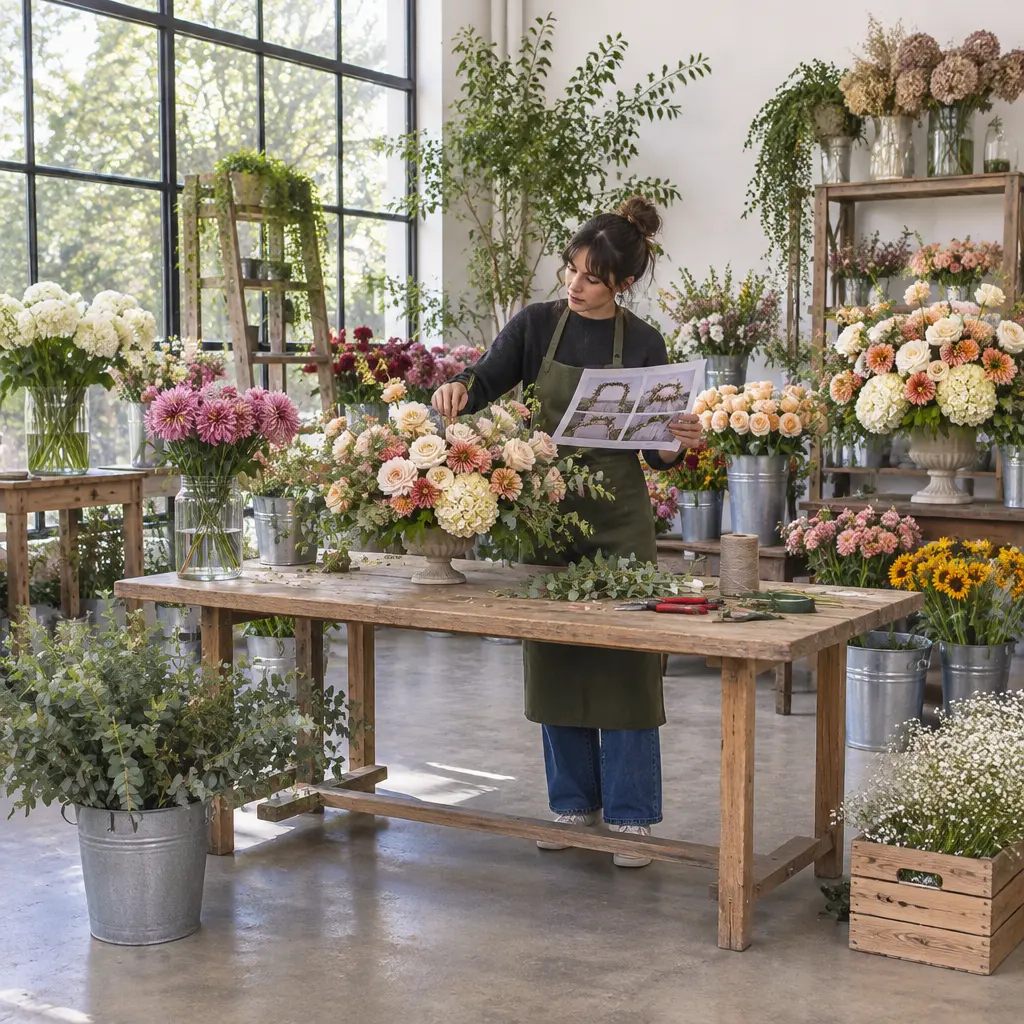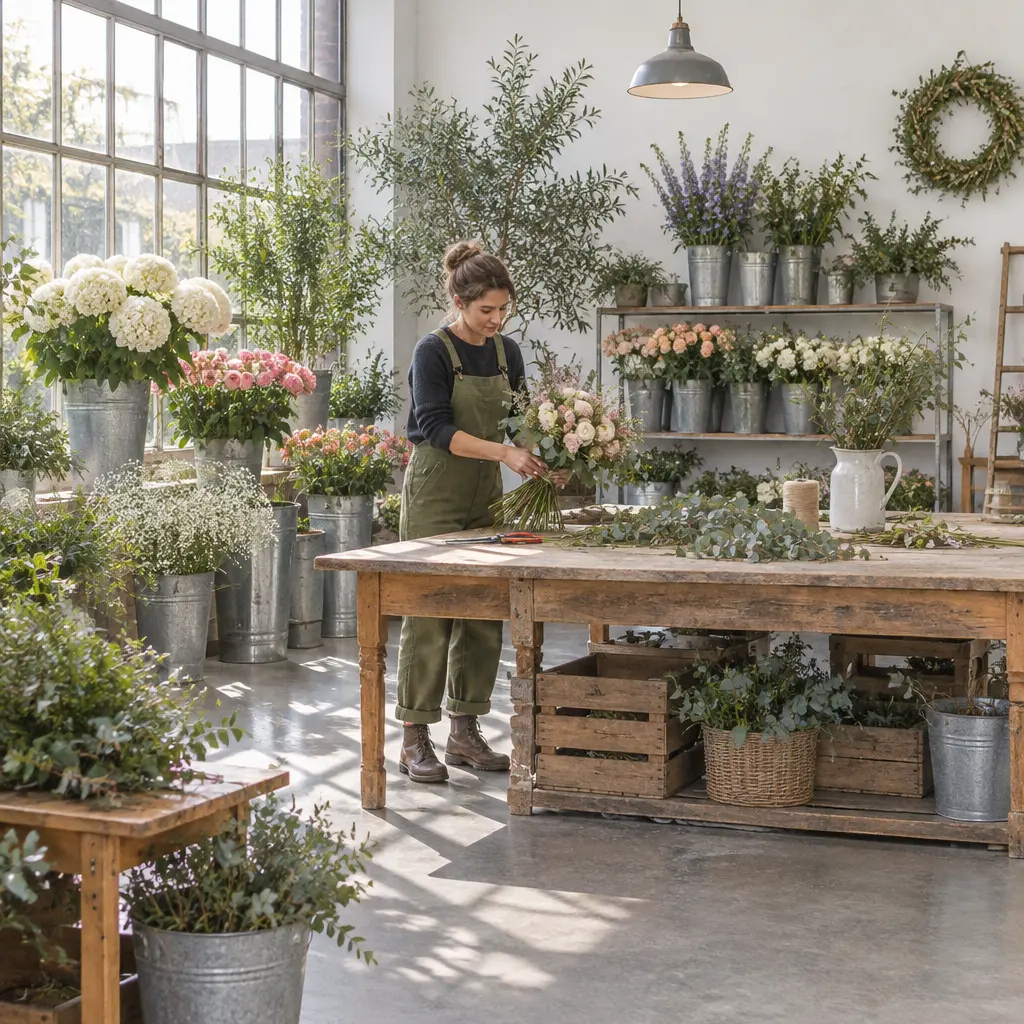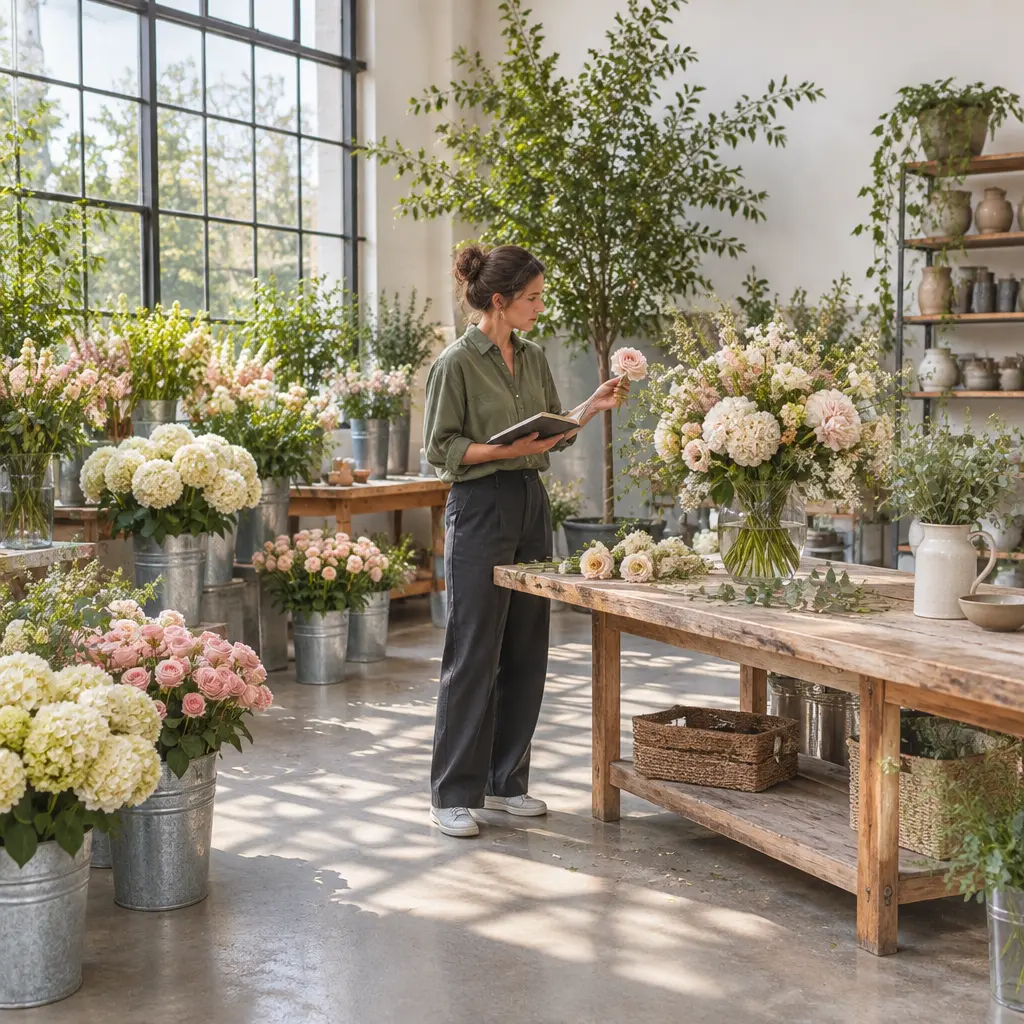
A wedding florist is the floral-design professional who plans and supplies arrangements such as bouquets, ceremony flowers, and reception centerpieces. For most weddings, couples should begin researching and contacting florists about 9–12 months ahead, then aim to book around 6–9 months before the date. Booking earlier—often 12–18 months ahead—is prudent for peak-season Saturdays, sought-after designers, or complex installations; a smaller or off-season wedding may be able to book closer to the date if the florist has availability. These are planning benchmarks, not universal rules: location, guest count, design scope, flower season, and vendor capacity all matter.
Booking timing depends on wedding florist availability and design scope
There is no industry-wide deadline that guarantees a florist will be available. Wedding-planning guidance from The Knot and Brides generally places florist booking within the months before the wedding, while emphasizing that popular vendors and busy dates can be reserved much earlier. Treat those timelines as practical planning advice rather than a statistical guarantee: published wedding-planning surveys do not establish one booking window that applies to every market or couple.
The florist’s role can range from delivering personal flowers to designing and installing flowers throughout a venue. That difference affects how much consultation, sourcing, preparation, and setup the job requires. A bouquet-and-boutonniere order is usually simpler than a wedding with a floral arch, hanging arrangements, multiple ceremony spaces, and a large reception. The more extensive the brief, the more useful an early start becomes.
Peak-season and high-demand dates
A peak-season date is one when many couples in a local market are competing for the same vendors. In the United States, spring and fall are commonly busy wedding seasons, but local climate and traditions can shift demand. Saturday celebrations, holiday weekends, and dates at popular venues may also attract more inquiries. If your date is fixed and falls in a busy period, contact florists 12–18 months ahead when possible; do not assume a particular lead time will secure a specific designer.
Large installations and complex floral plans
A complex floral plan includes designs that need substantial production or installation, such as a flower-covered ceremony structure, ceiling florals, large-scale table arrangements, or flowers across several locations. These projects require more than choosing stems: the florist may need to assess the venue, develop a design proposal, coordinate installation access, and plan labor and transport. Starting 9–12 months out—or earlier for especially ambitious work—leaves time to refine the design and confirm logistics.
Smaller weddings and flexible dates
A smaller wedding with a short list of arrangements may have a wider range of possible vendors, particularly if the couple is flexible about the date, flower varieties, or design. In that case, 4–6 months may be workable, but it is not a promise of availability. Ask florists directly whether they accept smaller orders and whether they have a minimum spend, delivery minimum, or limited menu for short-notice events.
Booking a wedding florist early protects choice, planning time, and budget
Booking early does not automatically make flowers cheaper, but it gives couples more time to compare proposals and make informed trade-offs. A florist can explain how the desired look relates to seasonal availability, labor, delivery, and installation. For context, The Knot’s Real Weddings Study has reported average U.S. wedding spending on flowers and décor as a combined category; that figure is not a florist-only price and should not be treated as a quote for an individual event. Local proposals are more useful because costs vary with location, flower choices, quantities, and design complexity.
Time for consultation and design decisions
An early booking creates room to discuss the overall visual plan: color palette, bouquet shape, ceremony focal points, table arrangements, and how flowers will work with the venue. Couples can also clarify what the florist supplies, what the venue provides, and whether arrangements can be reused between ceremony and reception. These decisions are easier to coordinate before the final schedule and layout are locked.
Seasonality and flower substitutions
Seasonality describes when particular flowers are naturally or commercially available in a given region. A requested flower may be costly, difficult to source, or unavailable at the desired quality on a particular date. The Society of American Florists advises that flower availability can vary with season and supply conditions. Ask the florist which blooms are realistic for the wedding month and agree on a flexible design direction rather than relying on a single exact variety.
Budget and contract clarity
Booking well ahead can help couples compare itemized proposals, but the key protection is a clear written agreement. Review the retainer, payment dates, cancellation and postponement terms, delivery and setup charges, rental items, substitution policy, and the deadline for final quantities. Confirm whether the proposal is an estimate or a fixed package and ask how changes may affect the total.
A wedding florist booking timeline turns the recommendation into action
Use the timeline below as a planning framework, adjusting it to your location, date, and design ambitions. The months are approximate; a florist’s own process and contract deadlines take priority.
- 12–18 months before: If your date is a busy-season Saturday, your venue is in high demand, or your floral design is installation-heavy, research florists and ask about availability as soon as your date is set.
- 9–12 months before: For many weddings, this is a sensible period to compare portfolios, arrange consultations, share a preliminary budget, and book the florist you prefer.
- 6–9 months before: Confirm the broad design direction, venue details, color palette, and the main floral elements. Check the contract for deadlines and required decisions.
- 1–3 months before: Review the updated guest count, table plan, delivery schedule, and any changes to the ceremony or reception layout. Finalize choices by the date specified in the contract.
- In the final weeks: Reconfirm access, setup timing, delivery contacts, and any venue restrictions with the florist and planner or venue coordinator.
Questions to ask before you book
A consultation is most useful when it tests both creative fit and practical capacity. Ask how many weddings the florist takes on for your date, who will lead the design and installation, what is included in the quote, and how substitutions are handled. Also ask about delivery distance, setup and breakdown, rental returns, insurance requirements, and the date by which final counts are due. If you have a planner, share the florist’s proposal with them so the design, schedule, and venue logistics align.
Conclusion: book according to date, demand, and floral complexity
For a typical wedding, begin contacting florists 9–12 months ahead and try to book 6–9 months before the celebration. Move earlier for peak dates, in-demand designers, and elaborate installations; a smaller or flexible wedding may have options with less notice, but availability is never assured. Early planning supports better comparison, seasonal substitutions, and clear coordination—not a guaranteed lower price. Set your date, make a preliminary floral wish list and budget, then contact local florists to ask what booking window is realistic for your event.
Sources: The Knot, The Knot Real Weddings Study, https://www.theknot.com/content/real-weddings-study; The Knot, Wedding Flowers Cost Guide, https://www.theknot.com/content/average-cost-wedding-flowers; Brides, When to Book Wedding Vendors, https://www.brides.com/story/when-to-book-wedding-vendors; Society of American Florists, Flower Care and Buying Guidance, https://safnow.org/