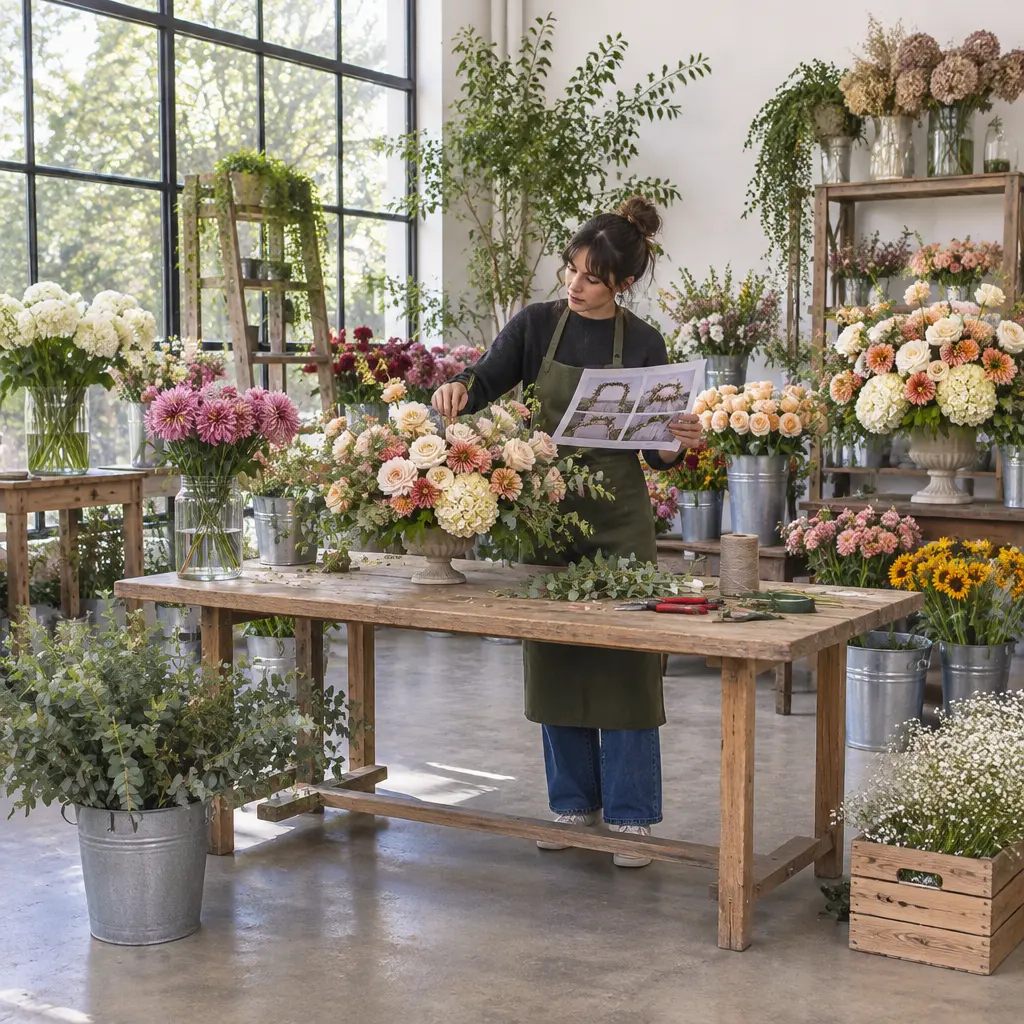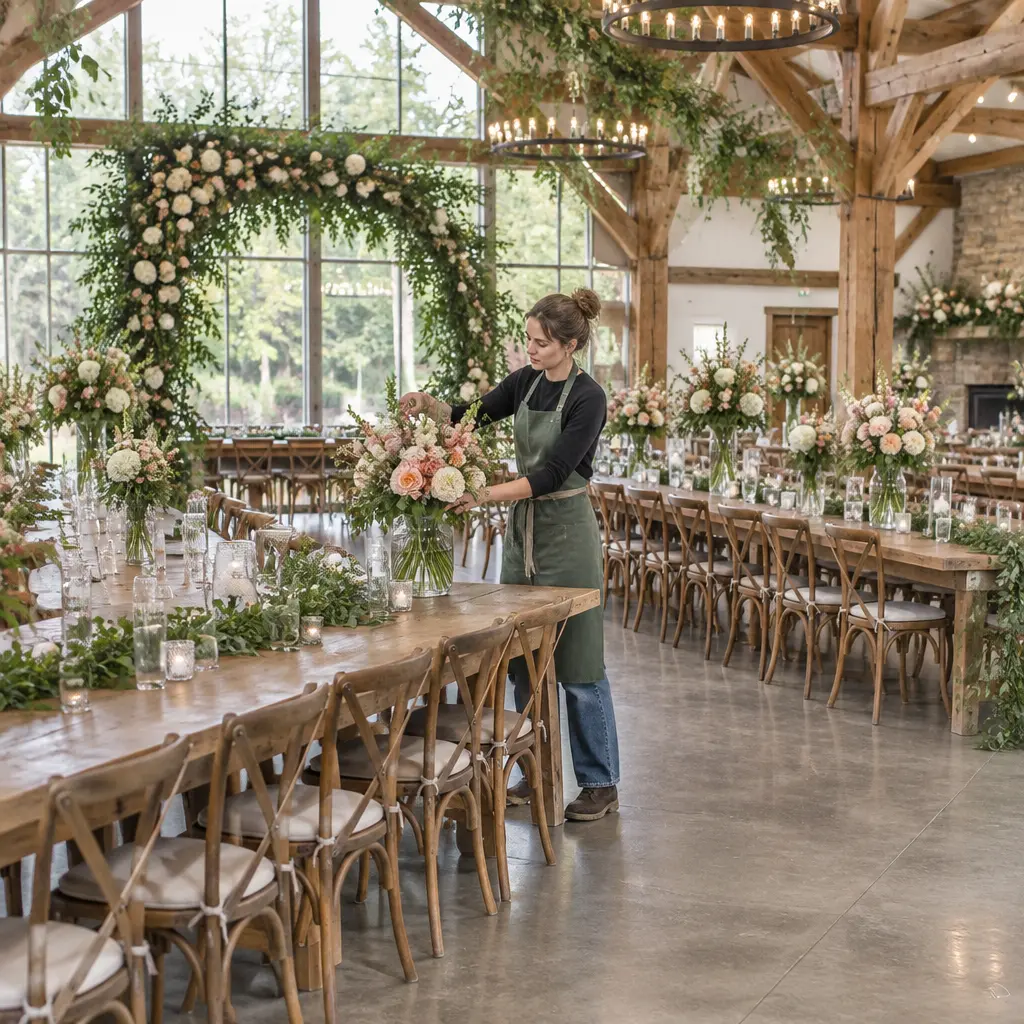
Premium floral design for multi-day wedding celebrations is the coordinated planning and creation of high-quality floral arrangements for a wedding’s connected events, such as a welcome party, ceremony, reception, and farewell brunch. It combines design direction with practical decisions about seasonality, venue conditions, installation, reuse, and budget. The scale matters: The Knot’s 2024 Real Weddings Study reported an average U.S. wedding spend of $33,000 in 2023, while its survey data also show that couples commonly plan celebrations involving multiple events and vendors. A successful floral plan therefore treats flowers as a cohesive, carefully managed design system—not as isolated centerpieces.
How premium floral design shapes multi-day wedding celebrations
There is no single industry-wide definition of “premium floral design.” In practice, premium describes a service level and design approach: intentional sourcing, skilled floral mechanics, custom styling, professional installation, and coordinated execution across the wedding schedule. The American Institute of Floral Designers (AIFD) describes floral design as an art that combines design principles with knowledge of flowers and their handling. Applied to a multi-day celebration, that approach also requires a plan for how arrangements will be transported, maintained, repurposed, or removed between events.
The main categories—or hyponyms—of this work include event-specific floral design, full-weekend floral planning, ceremony-to-reception repurposing, and floral production for destination weddings. Each differs in scope, but all connect a visual concept to operational details such as timing, access, temperature, water, and labor. The United States Department of Agriculture (USDA) notes that cut-flower quality and longevity are affected by handling and storage conditions, making logistics part of design rather than an afterthought.
A unified floral direction across separate events
A floral direction is the set of choices that makes the weekend feel visually connected: palette, flower varieties, foliage, vessel materials, scale, and arrangement style. The events do not need identical flowers. A relaxed welcome dinner might use compact bud vases, while the ceremony features a larger focal installation and the reception uses fuller centerpieces. Repeating a color, foliage type, or distinctive bloom can create continuity without making every event look the same.
Designers commonly translate the direction into a floral brief or mood board, then map each arrangement to a venue, event, and installation time. This is particularly useful when venues differ in lighting, architecture, or rules. A ceremony at an outdoor estate, for instance, may call for wind-conscious mechanics and heat-tolerant flowers, whereas a ballroom can support more delicate materials and elevated installations. The American Society of Landscape Architects’ guidance on designing for climate and site conditions reflects a broader principle that applies here: design choices should respond to the actual environment, not just an image reference.
Seasonal sourcing and flower selection
Seasonal sourcing means selecting flowers with attention to the wedding date, growing region, availability, and transport. It can improve freshness and provide more predictable access to particular varieties, although premium imported flowers may still be appropriate when a specific color or form is essential. A florist should distinguish between a guaranteed design feature—such as a palette or shape—and a specific flower variety that may depend on the crop and market conditions.
The USDA’s National Agricultural Statistics Service tracks U.S. floriculture production, including the value of covered floral crops, but a national production figure cannot guarantee availability for a particular wedding date. Couples can reduce uncertainty by approving substitutions in advance and requesting a written description of acceptable alternatives. For a weekend with several events, the florist can also prioritize focal flowers for the ceremony and use more flexible, seasonally available blooms in smaller arrangements.
Installation, care, and event-to-event logistics
Floral logistics cover the movement and care of flowers from preparation through strike. A production schedule should state when arrangements are made, delivered, installed, checked, relocated, and removed. It should also identify venue access windows, refrigeration or cool storage where available, water sources, staffing, and the person authorized to approve last-minute changes.
These details matter because cut flowers continue to lose water after harvest. The USDA Agricultural Research Service’s postharvest guidance emphasizes clean handling, appropriate hydration, and temperature management as factors in extending vase life. For a multi-day celebration, the florist may need to design separate fresh arrangements for each event, or prepare reusable elements that can be refreshed between uses. A tall ceremony installation, for example, may be unsuitable for transport or safe placement at a reception unless its mechanics and destination are planned beforehand.
How premium floral design balances budget, sustainability, and reuse
Once the design direction and production plan are established, the next predicate is allocation: deciding where floral spending and materials will have the greatest effect. Premium does not necessarily mean the highest possible flower count. It means aligning craftsmanship and resources with the couple’s priorities, the venue’s visual scale, and the demands of each event. A clear proposal helps separate flowers, vessels, labor, delivery, installation, rental, and strike so that decisions are based on comparable costs.
Budget allocation by visual priority
Budget allocation is the distribution of floral resources among high-impact and supporting areas. Couples often prioritize the ceremony focal point, the head table, or guest-table arrangements, while choosing simpler designs for a welcome gathering or brunch. This does not require a fixed percentage formula: costs vary by region, flower choice, guest count, complexity, labor, and venue access.
The Knot’s 2024 Real Weddings Study reported that the average U.S. wedding cost $33,000 in 2023, but that figure covers the overall wedding rather than a standard floral budget. It should be used as context, not as a pricing benchmark for flowers. A useful floral estimate itemizes the number and type of arrangements, mechanics, vessels, delivery, installation hours, and any relocation or breakdown labor. This makes trade-offs visible—for example, choosing a more restrained ceremony installation to fund fuller reception tables.
Repurposing arrangements across the weekend
Repurposing is the planned relocation of suitable floral pieces from one event or area to another. Ceremony aisle arrangements may become welcome-table flowers; smaller ceremony clusters can move to a bar or guest-book table. Reuse can reduce the need to purchase duplicate arrangements, but it is not automatically cost-free: moving pieces requires labor, safe transport, venue access, and enough time between events.
A florist should identify reusable pieces in the proposal and confirm their destination, transfer window, and handling method. Designs should also be created with repurposing in mind, using stable containers and mechanics that can tolerate movement. The Environmental Protection Agency’s waste hierarchy prioritizes source reduction and reuse before disposal, a principle that supports thoughtful event planning. Floral reuse should still be balanced against freshness and safety; arrangements exposed to heat or direct sun may not be suitable for a later event.
Responsible sourcing and end-of-event decisions
Responsible floral sourcing considers growing practices, transport, packaging, and what happens to flowers after the celebration. Couples can ask about locally or regionally available flowers, the florist’s sourcing relationships, packaging reduction, and whether arrangements can be donated or composted. These choices should be discussed early because donation partners may require specific timing, condition, and delivery arrangements.
The EPA identifies composting as a way to divert suitable organic materials from disposal, but floral waste may include non-compostable items such as floral foam, wire, plastic, or treated packaging. A responsible end-of-event plan separates flowers and green waste from mechanics and containers according to local waste rules. For a multi-day wedding, assigning one person—often the planner or florist—to coordinate donations, rentals, and disposal helps ensure the plan works in practice.
How couples can plan premium floral design for a wedding weekend
Planning succeeds when creative decisions are matched to a usable production brief. Couples should share the event schedule, venue plans, guest counts, budget range, and priorities before requesting a final proposal. The florist can then distinguish design choices from operational requirements and identify decisions that depend on seasonal availability or venue approval.
Build an event-by-event floral brief
An event-by-event brief is a concise record of what each gathering needs and how it should feel. For every event, note the location, guest count, start time, access window, indoor or outdoor conditions, focal areas, and any restrictions on candles, hanging installations, or floor attachments. Include reference images, but label which details are essential and which are flexible.
A practical brief might specify a restrained welcome dinner, a ceremony with one major floral focal point, a reception using selected ceremony flowers again, and a brunch with low-maintenance table arrangements. This structure helps the designer compare fresh production with reuse and makes staffing needs easier to estimate.
Confirm scope, substitutions, and responsibilities
The floral contract should describe the items being supplied, quantities or design intent, delivery and installation times, rental terms, strike responsibilities, and the process for substitutions. It should also state who handles venue approvals and who has authority to make decisions on the wedding day. When exact varieties are not guaranteed, the contract can protect the intended palette, form, and quality level while allowing appropriate seasonal alternatives.
A final walkthrough with the florist, planner, or venue representative can validate measurements, loading access, electrical or rigging needs, and the movement of arrangements between locations. For complex installations, drawings or a placement plan can prevent mismatches between the design proposal and the space.
Use a simple planning chart to compare design options
A planning chart can make decisions easier by comparing each floral element against impact, reuse potential, and logistical complexity. For example, a ceremony arch may have high visual impact but also high installation needs; bud vases may have modest individual impact but be easy to redistribute. This is a decision aid, not a substitute for a florist’s site assessment or itemized estimate.
- High-impact focal pieces: prioritize placement, installation time, structural safety, and whether they can be repurposed.
- Guest-table flowers: match scale to table size, sightlines, and service requirements.
- Supporting arrangements: use flexible seasonal flowers and simple vessels where visual impact is secondary.
- End-of-event plan: assign responsibility for rentals, donations, composting, and removal of non-compostable mechanics.
Conclusion: premium floral design as a coordinated wedding-weekend experience
Premium floral design for multi-day wedding celebrations connects a unified creative direction with seasonal sourcing, careful installation, budget choices, and realistic reuse. A floral plan is strongest when it treats each event as distinct while carrying recognizable design details across the weekend. It also accounts for the practical facts of flower care, venue access, labor, and end-of-event handling.
Couples planning a celebration should prepare an event-by-event brief, request an itemized proposal, confirm substitutions and transfer logistics, and discuss donation or composting options before the wedding week. These steps help protect the design, reduce avoidable duplication, and make floral decisions more transparent. For further guidance, review AIFD design resources, USDA postharvest information, EPA waste-prevention guidance, and current wedding-cost research before meeting with a floral designer.
Sources: The Knot, 2024 Real Weddings Study, https://www.theknot.com/content/average-wedding-cost; American Institute of Floral Designers, About AIFD, https://aifd.org/about-aifd/; U.S. Department of Agriculture, National Agricultural Statistics Service, Floriculture Crops, https://www.nass.usda.gov/Publications/AgCensus/2017/Online_Resources/Floriculture/index.php; U.S. Department of Agriculture, Agricultural Research Service, Postharvest Technology of Horticultural Crops, https://www.ars.usda.gov/; U.S. Environmental Protection Agency, Sustainable Materials Management: Non-Hazardous Materials and Waste Management Hierarchy, https://www.epa.gov/smm/sustainable-materials-management-non-hazardous-materials-and-waste-management-hierarchy; U.S. Environmental Protection Agency, Composting at Home, https://www.epa.gov/recycle/composting-home