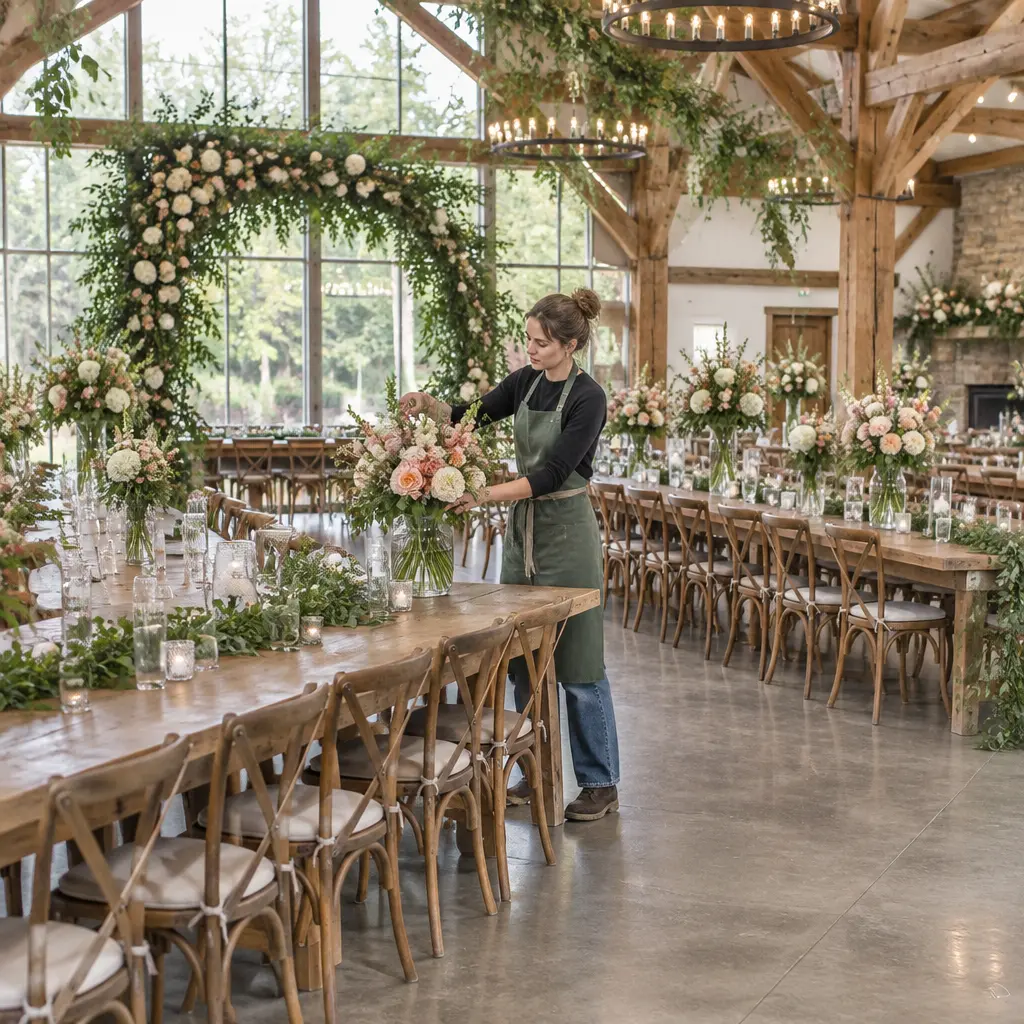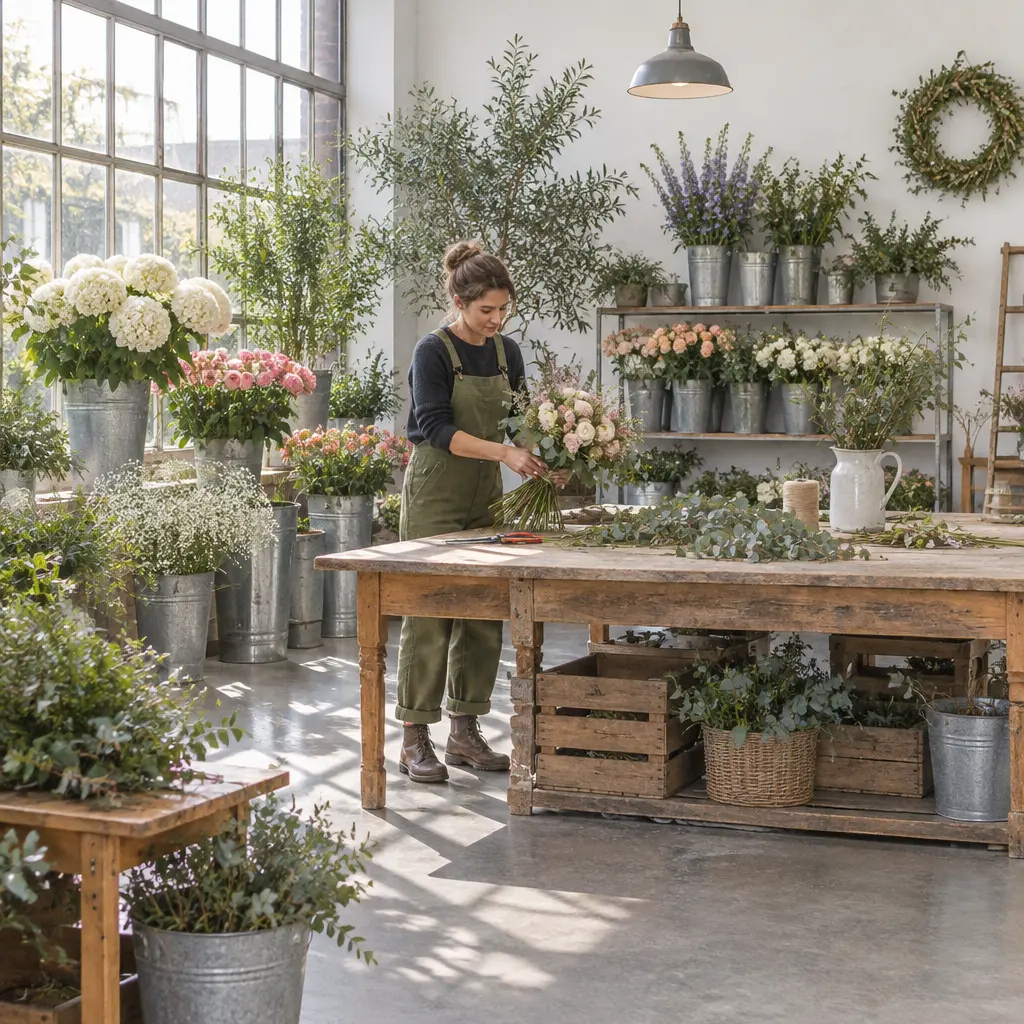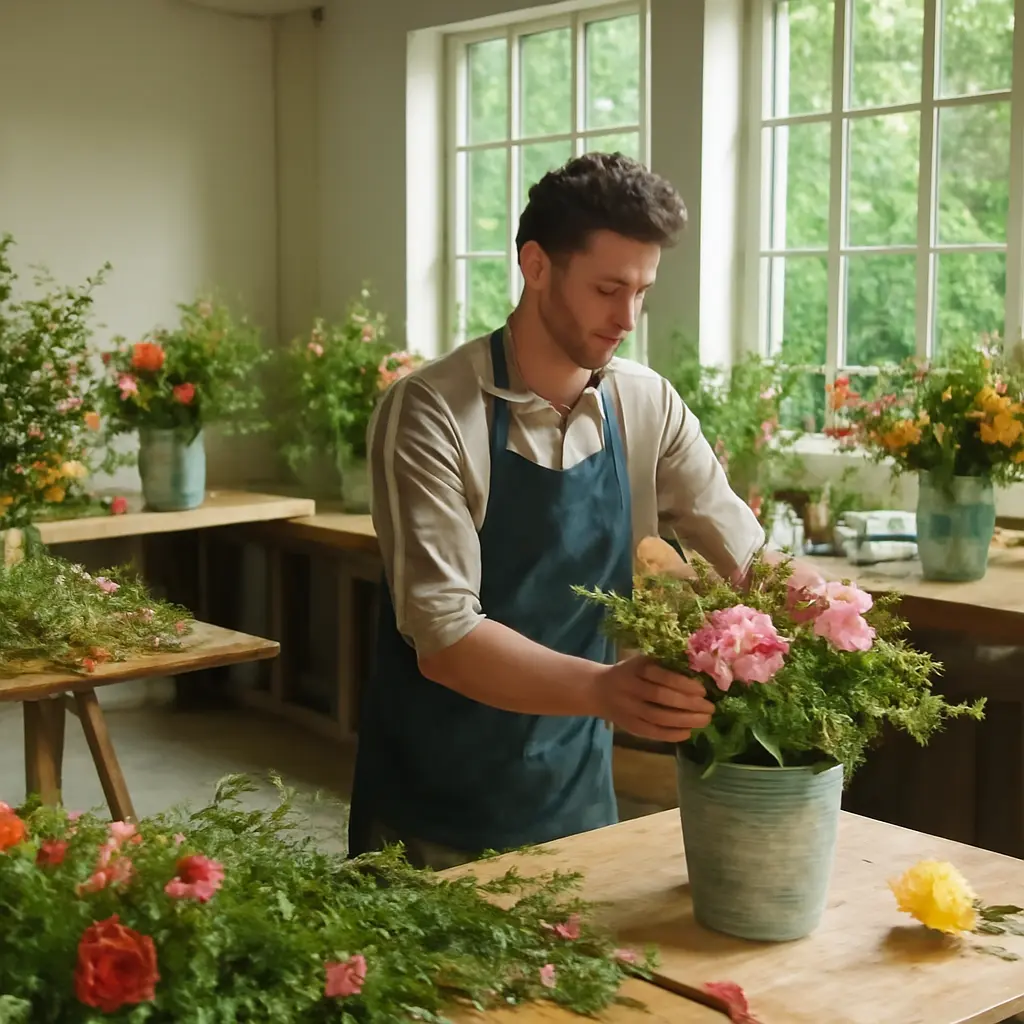
Seasonal wedding flowers are arrangements built around blooms that are naturally available at a particular time of year. Rather than demanding a fixed, year-round flower recipe, many couples are choosing designs that reflect the wedding date, local growing seasons, and a more natural, garden-inspired look. The shift fits broader wedding trends: The Knot’s 2024 Real Weddings Study reported that couples spent an average of $2,723 on wedding flowers and décor, making choices about scale, seasonality, and substitutions meaningful parts of both style and budget. Seasonal blooms can bring a sense of place and spontaneity, but they do not guarantee lower costs; availability, labor, and flower type still matter.
Seasonal Blooms Define a More Flexible Wedding Flower Style
Seasonal floral design means selecting flowers and foliage based partly on what is naturally available near the wedding location and date. The American Society of Florists describes seasonal availability as shaped by growing conditions and sourcing, while florists commonly distinguish locally grown flowers from imported flowers that may be available outside their natural local season. For couples, the practical idea is flexibility: choose a palette, mood, and overall shape, then let the florist recommend suitable flowers.
This approach is not a strict rule that every stem must be local or seasonal. It is a design strategy that can include imported flowers, greenhouse-grown varieties, and non-floral elements. Its appeal is that it replaces exact-flower perfection with a coherent look that can respond to what growers and wholesalers can actually supply.
Seasonal availability and flower substitutions
Availability refers to whether a flower can be sourced in a desired quantity, quality, and condition for a specific date. It varies with climate, weather, production schedules, and transport. A florist may suggest a substitute that shares a flower’s color, texture, or visual role rather than its exact species—for example, using garden roses or ranunculus to achieve a soft, layered focal effect when a preferred variety is unavailable.
Couples can make substitutions easier by describing priorities in order: first the palette, then the overall shape and feeling, then any must-have flowers. The Society of American Florists advises consumers to communicate a budget and remain open to alternatives, since flower prices and availability can change with season and demand. A short list of preferred flowers with “similar alternatives welcome” gives a florist room to adapt without losing the design direction.
Why the season does not automatically determine price
Seasonality can create opportunities to use abundant flowers, but it is not a dependable discount formula. A locally grown bloom may require specialized labor or be available only in limited quantities; a popular flower may remain costly during peak wedding periods. The Knot’s reported $2,723 average for wedding flowers and décor is a broad national benchmark—not a prediction for an individual couple, because the figure combines different wedding sizes, floral plans, and décor choices.
A useful budget conversation focuses on the design’s largest cost drivers: the number and size of arrangements, labor-intensive installations, flower varieties, delivery, and setup. Couples who prioritize seasonal flowers can ask for a proposal with a fixed total budget and a design that allows substitutions if market conditions change.
Seasonal Blooms Shape Color, Texture, and Wedding Atmosphere
The visual character of seasonal floral design comes from combining flowers, foliage, and forms that fit the time and setting. Instead of treating a bouquet as a collection of identical stems, florists can use variation in height, texture, and openness to create an arrangement that feels more like a garden. This is one reason the trend connects naturally to relaxed styling, personal details, and venue-aware design.
Spring and summer: airy, abundant arrangements
Spring designs often draw on delicate forms and fresh colors; summer designs can make use of a wider range of flowering plants, depending on local growing conditions. Peonies, tulips, sweet peas, cosmos, and dahlias are examples often associated with particular parts of the growing season, though timing varies by region and supplier. A florist can confirm what is likely to be available for the exact wedding date.
A real-world application is a country-garden ceremony where the bouquet, aisle pieces, and table flowers share a palette but not an identical recipe. Using a mix of focal flowers, smaller blooms, and foliage can give the event visual continuity while allowing each arrangement to respond to its size and location.
Autumn and winter: sculptural flowers and foliage
Autumn arrangements often use deeper colors, seed heads, berries, branches, and textural foliage, while winter designs may emphasize evergreen materials, sturdy blooms, and sculptural shapes. These are design possibilities rather than fixed seasonal rules: imported flowers and greenhouse production can broaden the palette, and local conditions determine what is genuinely in season.
For an autumn reception, a florist might pair seasonal foliage and branches with a small number of focal flowers instead of filling every centerpiece with blooms. In winter, candles, fruit, or reusable vessels can add richness and scale. These choices can make the arrangement feel connected to its setting without requiring a specific flower in every piece.
Garden style and intentional imperfection
Garden-style floristry describes arrangements with varied heights, visible movement, and a less uniform silhouette than tightly packed, symmetrical designs. It does not mean careless construction: the florist still considers balance, mechanics, color, and how arrangements will look from different viewpoints. Seasonal material often supports this style because varied stem lengths and forms can be incorporated rather than trimmed into identical shapes.
Couples can translate “not too perfect” into clear instructions such as “loose and airy,” “asymmetrical but balanced,” or “a natural mix of textures.” These descriptions are more actionable than simply asking for something rustic or wild, and they help distinguish an intentional design from an arrangement that lacks structure.
Seasonal Blooms Connect Wedding Choices to Place and Sustainability
Seasonal flowers can link a wedding to its region, but local sourcing and environmental impact are not interchangeable claims. The University of Vermont Extension’s work on specialty cut flowers highlights the role of regional growers and the growing interest in locally produced stems. At the same time, a flower’s overall footprint depends on factors such as growing methods, heating, packaging, storage, and transport—not simply the distance from farm to venue.
Local sourcing and regional identity
Local sourcing means buying flowers from growers in or near the wedding region. It can make a design feel place-specific and may help couples learn more about how their flowers were produced. The USDA’s Local Food Directories include farms and food hubs, and some flower growers also sell directly through farm markets, subscriptions, or florist partnerships; availability and sales channels differ by region.
A couple planning a countryside wedding can ask a florist whether nearby farms can supply the event’s date, color range, and volume. If local supply is limited, a mixed sourcing plan—regional foliage and supporting flowers alongside selected imported focal blooms—can preserve the intended look without overstating what “local” means.
Waste reduction and reuse after the celebration
Sustainable floral planning also considers what happens after the ceremony. Couples can reuse ceremony arrangements at the reception, choose designs that can be transferred safely, donate suitable flowers through a local organization, or ask their florist about composting plant material. Reuse requires advance planning: pieces must be portable, the venue must allow relocation, and staff need time to move them.
The Environmental Protection Agency’s guidance on food and yard waste supports composting organic material where appropriate, but floral waste may include wire, foam, ribbon, or other materials that cannot go into every compost stream. Ask the florist and venue how they separate stems from mechanics and what disposal options are available locally.
How to Choose Seasonal Wedding Flowers Without Losing the Vision
The most effective planning process starts with the experience couples want guests to have, then translates that vision into a flexible floral brief. Seasonal design is most successful when the florist understands the wedding date, location, budget, venue conditions, and which details matter most.
- Choose a palette and mood before settling on a fixed flower list.
- Tell the florist the wedding date and location, and ask what is likely to be available then.
- Identify one or two must-have flowers, while allowing substitutions for the rest.
- Set a total floral budget and prioritize high-impact pieces, such as the bouquet, ceremony focal point, or reception tables.
- Ask how delivery, setup, heat, cold, and transport will affect the flowers on the day.
- Discuss reuse, donation, or composting plans before the designs are finalized.
This brief works for both highly styled weddings and informal celebrations. It gives the florist room to source responsibly and solve practical constraints while preserving the couple’s chosen colors, scale, and atmosphere.
Conclusion: Seasonal Flowers Make Room for Personal Style
Seasonal blooms offer couples a way to build wedding flowers around availability, setting, and a more natural visual language. Flexible substitutions support the design, seasonal palettes shape atmosphere, and local sourcing or post-event reuse can connect floral choices to broader sustainability goals. Yet seasonality alone does not guarantee lower costs or a smaller environmental footprint; those outcomes depend on sourcing, production, labor, and planning.
The practical takeaway is to share a clear vision while staying open about individual stems. Couples can start by speaking with a florist or regional grower, confirming likely availability for their date, and asking for a proposal that prioritizes the elements they value most.
Sources: The Knot, 2024 Real Weddings Study, https://www.theknot.com/content/real-weddings-study; Society of American Florists, Flower Care and Consumer Information, https://safnow.org/; University of Vermont Extension, Specialty Cut Flower Production and Marketing, https://www.uvm.edu/extension/agriculture/cut-flowers; U.S. Department of Agriculture, Local Food Directories, https://www.ams.usda.gov/local-food-directories; U.S. Environmental Protection Agency, Composting at Home, https://www.epa.gov/recycle/composting-home