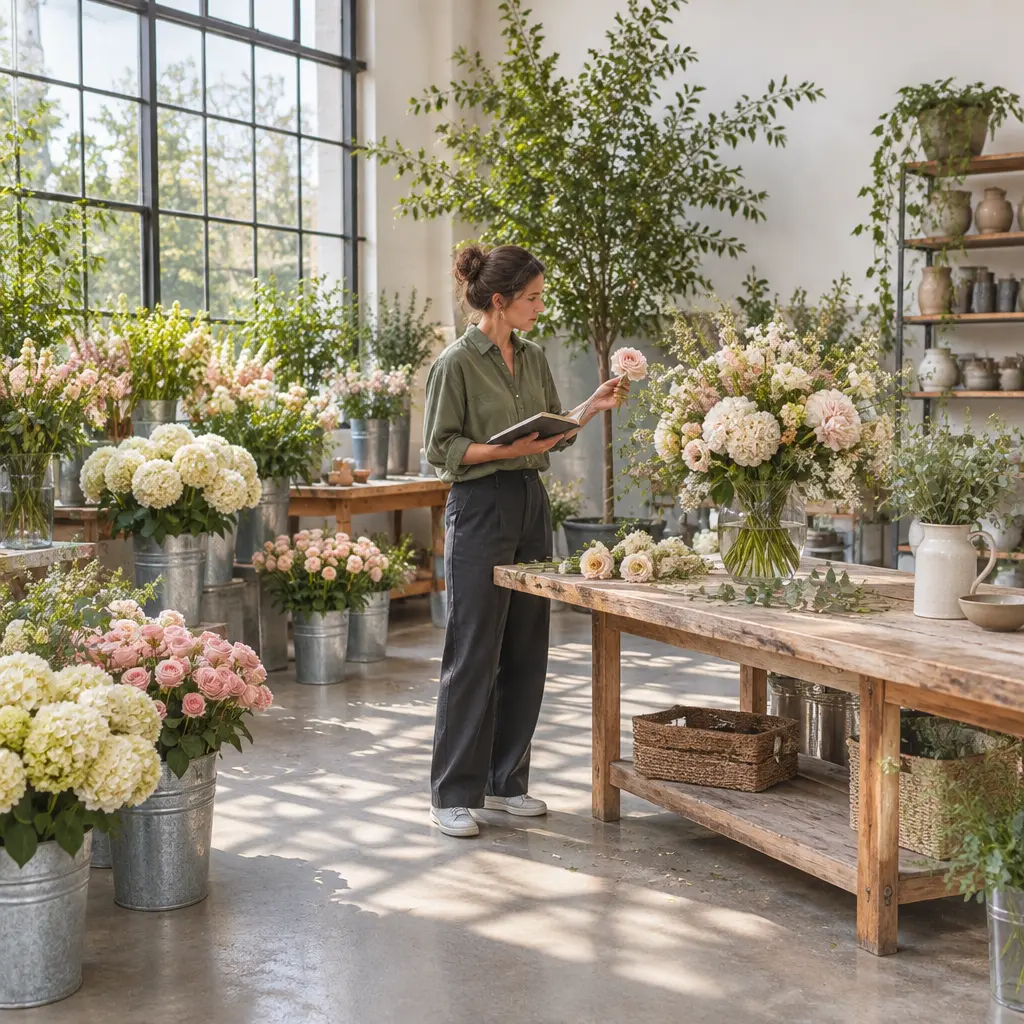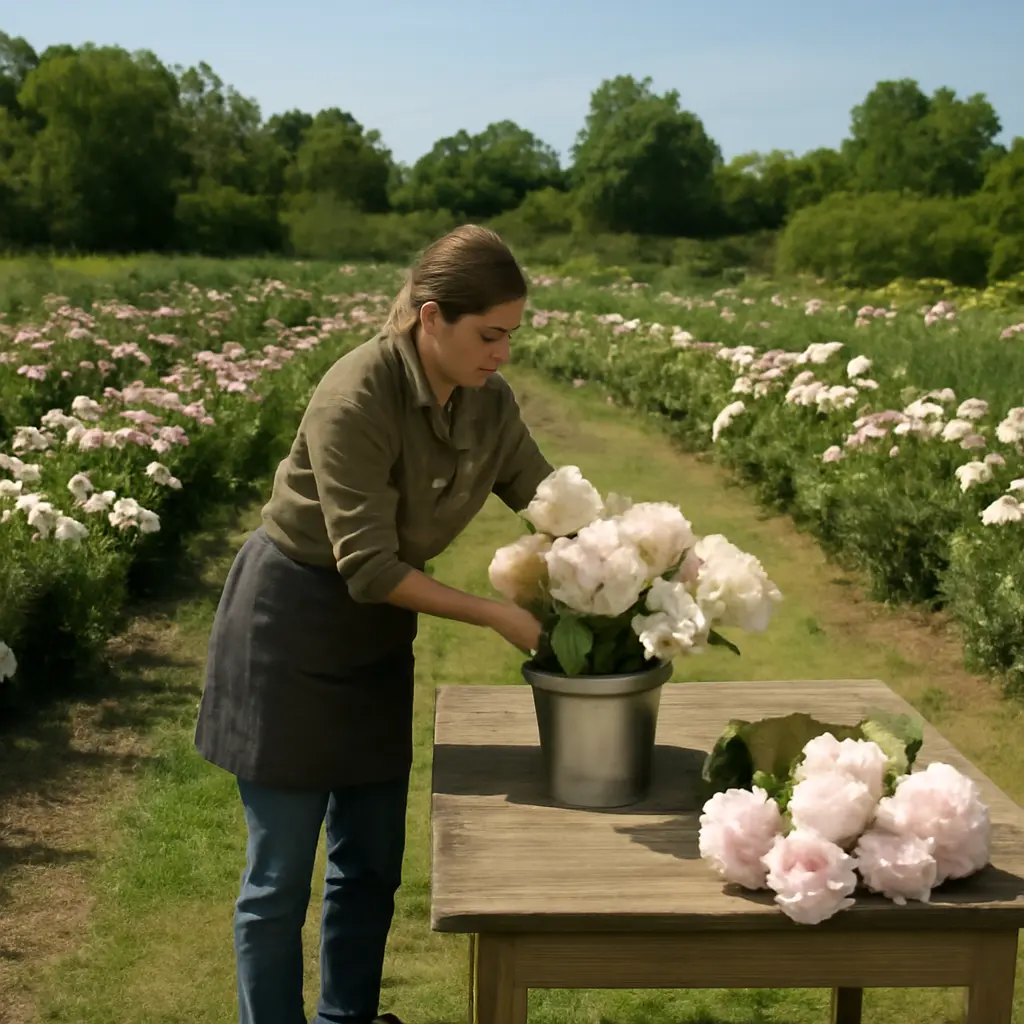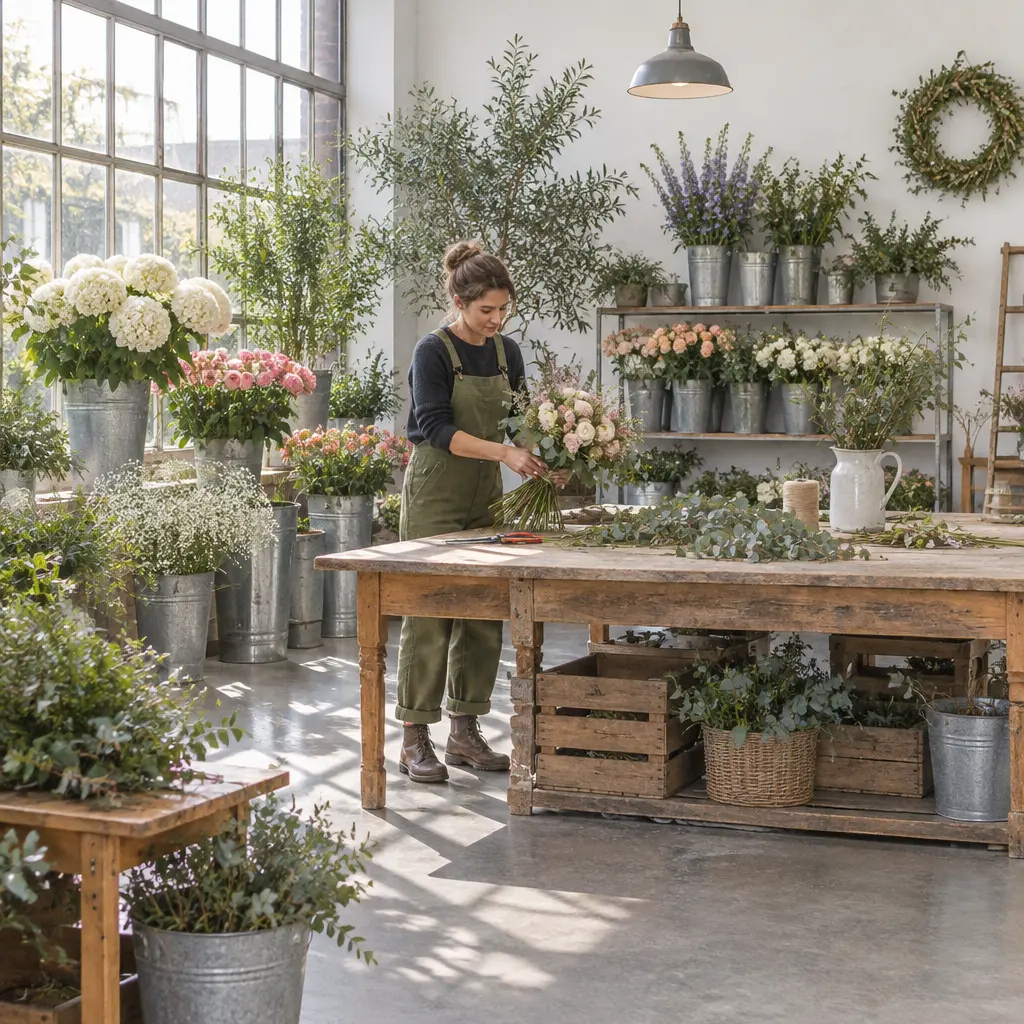
Wedding flowers can often be handled by either a dedicated florist or a wedding planner, but the right choice depends on the scale, design complexity, and setup needs. A florist specializes in selecting, sourcing, conditioning, and arranging flowers; a planner coordinates the broader event and may manage floral logistics or simple arrangements, depending on their services. The distinction matters: The Knot’s 2024 Real Weddings Study reported that couples spent an average of $2,800 on flowers, while the U.S. Bureau of Labor Statistics describes floral design as work requiring knowledge of flower types, care, and arrangement techniques. Below, we explain what each professional does, when a planner may be enough, how costs and logistics differ, and how to choose a reliable approach.
Wedding florist services define specialized floral design
A wedding florist is a floral professional who plans and creates arrangements for a wedding, including personal flowers, ceremony installations, and reception décor. The Society of American Florists describes floral design as combining flowers and foliage into arrangements, while professional wedding work also involves estimating quantities, sourcing products, and preparing them for a specific event. A florist’s responsibilities can range from a small order of bouquets to comprehensive design, delivery, installation, and strike.
The key distinction is that floral design and event coordination are related but separate services. A florist is accountable for the floral product and its installation; a planner is primarily accountable for keeping the event’s people, timing, and vendors coordinated. Some businesses offer both, so couples should verify exactly what is included rather than infer responsibilities from a job title.
Personal flowers and small-scale arrangements
Personal flowers are pieces worn or carried by people, such as a bridal bouquet, attendants’ bouquets, boutonnieres, corsages, and flower crowns. A planner may be able to order a few standard items from a local flower shop or help assemble simple, pre-made pieces, particularly for an intimate wedding. A florist is the stronger choice when the flowers need a unified palette, specific varieties, careful construction, or reliable delivery at a particular time.
Even a modest personal-flower order requires decisions about flower availability, color, durability, and handling. The BLS notes that floral designers select and arrange flowers and greenery and must understand how to care for them. That expertise is useful when bouquets need to remain fresh through photographs, a ceremony, and a reception.
Ceremony installations and reception centerpieces
Installations include floral arches, aisle arrangements, statement pieces, hanging flowers, and large ceremony backdrops. Centerpieces and other reception arrangements must fit the tablescape, room dimensions, sightlines, and venue rules. These projects involve more than making arrangements: They may require mechanics, vessels, transport, ladders, a setup crew, and coordination with venue access times.
A planner can coordinate when an installation happens and communicate venue requirements, but that does not necessarily mean the planner designs or builds it. For substantial installations, a florist or experienced floral-design team is generally the more appropriate lead. Ask who supplies the structures, installs the flowers, removes them, and takes responsibility if a design cannot be installed as planned.
Wedding planner responsibilities can include floral coordination
A wedding planner manages planning tasks and event-day logistics, with the exact scope determined by the contract. The Association of Bridal Consultants distinguishes planning and coordination services from the work of specialized vendors, although individual planners may offer additional design or setup services. A planner can gather floral requirements, relay the schedule, confirm delivery windows, and ensure that the florist’s work fits the event plan.
A planner may also recommend a florist, consolidate vendor communications, or handle a small number of simple floral details. These are coordination functions unless the planner explicitly contracts to provide floral design. The practical question is not simply whether a planner “can handle flowers,” but whether they have agreed to create, purchase, transport, install, and remove them.
When a planner may be enough
Planner-only floral handling can work when the wedding is small, the flower plan is intentionally simple, and the planner offers the relevant service. Examples include ordering a limited number of standard bouquets, placing bud vases supplied by the couple, or coordinating pickup from a flower market. This option is most realistic when there are few arrangements, no elaborate mechanics, and a clear backup plan.
Couples should confirm whether the planner has floral-design experience, whether materials and labor are included, and whether the work is covered by insurance and the contract. If the planner is only coordinating a florist, that can still be valuable—but it is not a substitute for a florist’s design and production services.
When a dedicated florist is the better fit
A dedicated florist is usually preferable when the floral plan includes many arrangements, a precise visual concept, premium or seasonal flowers, a large guest count, or installations that must be built on site. Specialized support is also helpful when the couple needs guidance on substitutions, flower care, quantities, or how to adapt a reference image to the venue and budget.
The Knot’s 2024 Real Weddings Study put average wedding-flower spending at $2,800. That figure is a broad survey average, not a quote or a recommended budget: actual costs vary with location, season, flower choices, labor, delivery, rentals, and installation. It does, however, illustrate why couples should compare the full scope of floral services rather than only the per-arrangement price.
Wedding flower costs and logistics depend on service scope
Floral costs reflect both materials and labor. A proposal may include flowers, greenery, design time, containers, mechanics, delivery, setup, breakdown, and rental fees. A planner’s fee, by contrast, may cover event management without including the cost of flowers or floral production. Comparing a florist’s complete proposal with a planner’s coordination fee alone can therefore give a misleading impression of which option is less expensive.
Budget comparisons should cover the complete job
Ask each provider to itemize the scope: number and type of arrangements, flower and color assumptions, delivery, installation labor, rentals, taxes, and post-event removal. The U.S. Bureau of Labor Statistics’ Occupational Outlook Handbook describes floral designers’ work as including customer consultation, flower selection, and arrangement creation; wedding proposals may add the event-specific transport and installation tasks needed to deliver that work at a venue.
A lower-cost plan may be a good choice if it reduces the number of arrangements or uses simpler designs. It may not be a genuine saving if setup, transport, or disposal is omitted and later assigned to the couple or planner. Request a written description of who is responsible for every task.
Timing, freshness, and venue access
Flowers are perishable, so delivery and setup must be aligned with the event schedule and venue access. The florist needs to know when the room becomes available, when photographs begin, and whether arrangements will be moved between ceremony and reception. The planner can help coordinate those time windows, while the florist advises how long particular designs can be displayed and what handling they require.
For example, an installation that must be completed during a short venue-access window benefits from a floral team familiar with setup logistics and a planner who can coordinate the venue, rental company, and other vendors. This division of responsibility reduces the chance that a design is ready but cannot be installed on schedule.
Choosing between a wedding florist and planner-led flowers
The best arrangement depends on design complexity, workload, and the couple’s appetite for hands-on tasks. A planner may handle coordination while a florist provides the design, or a florist may manage the complete floral scope with the planner overseeing the wider event. The following checklist helps clarify which model fits.
Questions to ask before booking
- Who designs the arrangements, and who purchases and conditions the flowers?
- Who transports, installs, relocates, and removes the arrangements?
- Are delivery, setup labor, rentals, and breakdown included in the quote?
- What happens if a requested flower is unavailable or arrives in poor condition?
- Does the planner’s contract include floral work, or only communication and scheduling?
- Can the florist provide examples of comparable events and a written scope of work?
A practical decision guide
Choose a florist when the flowers are a major design feature, the order is extensive, or installation demands specialist skill. Consider planner-led handling for a small, simple order only when the planner explicitly offers that service and can meet the care and setup requirements. For many weddings, the most dependable arrangement is collaborative: the florist owns floral design and execution, while the planner coordinates timing, venue access, and vendor communication.
A useful visual comparison is a two-column checklist showing “floral production” tasks on one side and “event coordination” tasks on the other. Assigning each task to a named person before signing contracts can expose gaps—for example, who collects rented vases or moves ceremony flowers to the reception.
Conclusion: Match wedding flowers to the right professional
A florist specializes in floral selection, design, preparation, and installation; a planner specializes in organizing the wedding and may coordinate floral work or provide limited arrangements if that service is part of the agreement. The decision turns on the size and complexity of the floral plan, the work included in each contract, and the logistics required at the venue. With average flower spending reported at $2,800 by The Knot’s 2024 study, clear scope and cost comparisons are especially important.
Before booking, list every floral task, assign an owner, and compare complete written proposals. If the flowers are central to the look of the day or require installation, consult a dedicated florist; if the plan is minimal, ask whether your planner genuinely provides the required floral service. Clear responsibilities help protect the budget and ensure the flowers are ready when the celebration begins.
Sources: The Knot, “2024 Real Weddings Study,” https://www.theknot.com/content/average-wedding-cost; U.S. Bureau of Labor Statistics, “Floral Designers,” Occupational Outlook Handbook, https://www.bls.gov/ooh/arts-and-design/floral-designers.htm; Society of American Florists, “What Is Floral Design?”, https://safnow.org/aboutflowers/what-is-floral-design/; Association of Bridal Consultants, “Wedding Planner Certification and Membership,” https://www.bridalassn.com/.