
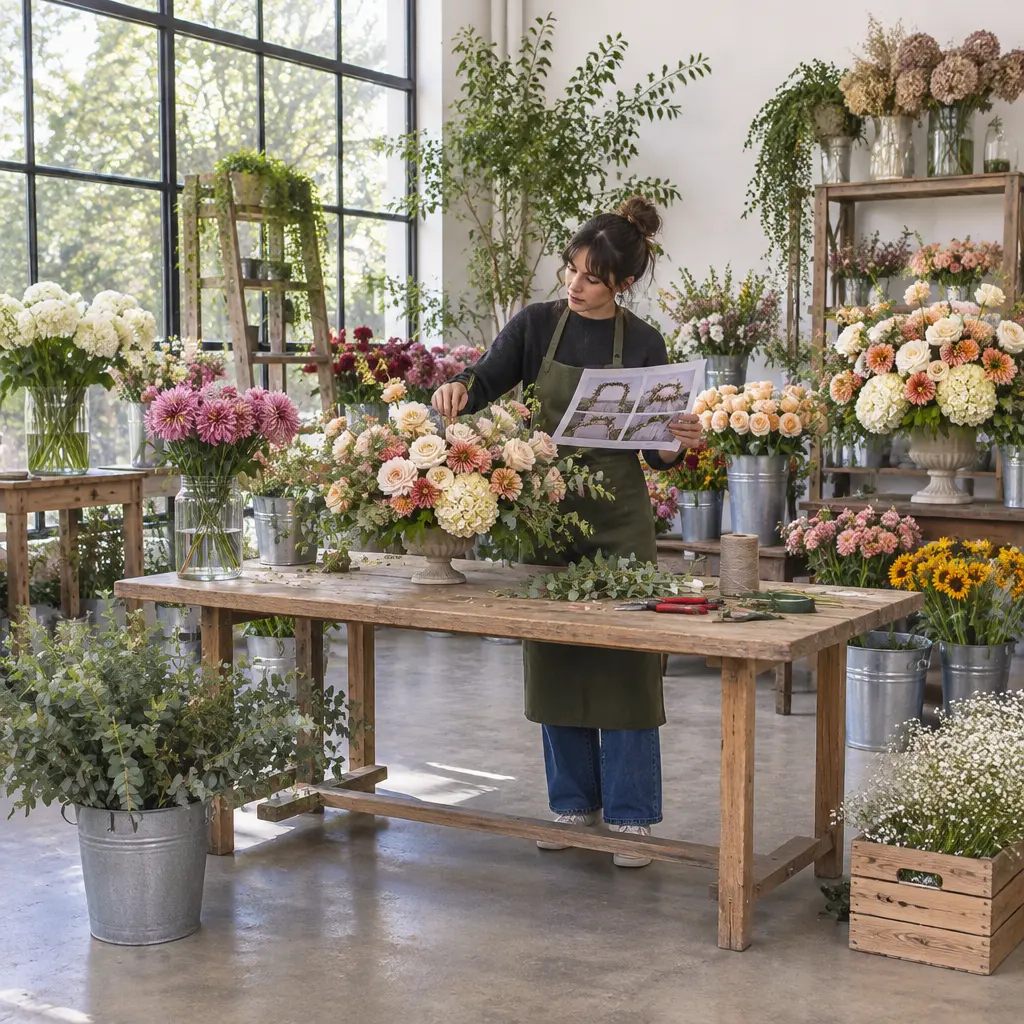
A luxury wedding florist designs and delivers floral work for a wedding, from personal flowers to ceremony installations and reception arrangements. Before hiring one, ask how pricing is built, where flowers and materials come from, and what experience the florist has with events like yours. These questions help you compare proposals fairly, understand what is included, and assess how the team will handle design, logistics, substitutions, and setup. The U.S. Bureau of Labor Statistics classifies floral design as an occupation involving the selection and arrangement of live, dried, and artificial flowers and foliage; for a wedding, that creative work is also shaped by seasonality, labor, transport, installation, and venue requirements.
How Luxury Wedding Florist Pricing Is Structured
A florist’s proposal is a priced plan for specified floral products and services. It may combine design fees, flowers, hard goods, labor, delivery, installation, breakdown, and taxes rather than quote a single price per arrangement. Ask for an itemized estimate and a clear explanation of what is fixed, estimated, or subject to change. The Association of Bridal Consultants and wedding-industry planning guidance commonly distinguish floral design from the broader event budget; the relevant comparison is therefore the complete scope, not just the flower subtotal.
What Is Included in the Proposal?
The proposal should describe each arrangement and service: bouquets, boutonnieres, ceremony pieces, centerpieces, installations, delivery, setup, and strike or removal. Ask whether the quote includes rental vessels, mechanics such as foam-free supports, candles, structural materials, labor hours, and venue access charges. Clarify whether taxes, gratuity, payment-processing fees, and travel are included or added later. A detailed scope makes two bids more comparable and reduces the risk of discovering that an expected service was excluded.
How Are Minimums, Deposits, and Changes Handled?
A minimum spend is the lowest floral order a studio accepts for a particular date, location, or service level; it is not necessarily the final cost. Ask how much is due to reserve the date, when later payments are due, and whether deposits are refundable. Confirm the deadline for guest-count or design changes, the cost of additions, and the policy for cancellations or postponements. Request the terms in the contract, including what happens if a requested flower is unavailable.
How Can You Adjust Scope Without Losing the Design?
If a proposal exceeds budget, ask the florist to identify the elements with the greatest visual impact and suggest alternatives. Reusing ceremony arrangements at the reception, reducing the number of table pieces, or choosing seasonal flowers may lower costs, although moving installations requires labor and venue coordination. Compare options by the revised total and by what changes in scale, flower varieties, and service—not by an isolated per-stem price. The U.S. Department of Agriculture’s floriculture reporting tracks production and trade in floral crops, illustrating why flower availability and cost can vary by crop and market conditions.
How Flower Sourcing and Seasonality Affect a Luxury Wedding Florist’s Design
Sourcing describes how a florist obtains flowers, foliage, and nonfloral materials, including their origin, season, and supply route. It affects freshness, availability, price, and the choices a designer can confidently promise. Ask where flowers are grown, whether the studio uses local or imported products, and how it handles substitutions. “Local” and “sustainable” can mean different things in practice, so request specific examples rather than relying on broad labels.
Which Flowers Are Seasonal and Available?
Seasonal flowers are varieties that are typically more readily available during particular growing periods in a given region. Availability still depends on weather, farm output, and the event date. Ask the florist to identify the requested varieties that are essential to the design and those that can be substituted. A flexible palette—defined by color, shape, and texture rather than an exact stem list—can help preserve the intended look if supply changes. The USDA’s floriculture statistics document the commercial production of cut flowers and foliage, but a national data set cannot guarantee availability from a specific farm on a specific wedding date.
Are Flowers Local, Imported, or a Mix?
Local sourcing means purchasing from growers relatively close to the event or design studio; imported flowers travel through international supply chains. Neither label alone establishes quality or environmental impact. Ask which flowers are local, the expected growing region, and whether the florist can name farms or wholesalers. Also ask how transport, refrigeration, packaging, and season affect the sourcing decision. The USDA Foreign Agricultural Service’s trade data and market reports can provide broader context about international agricultural trade, but the florist should explain the actual supply plan for your order.
What Is the Substitution and Sustainability Policy?
A substitution policy explains what the florist may change when a specified flower or material becomes unavailable. Ask whether you will be consulted, what qualities will be preserved, and whether substitutions can affect the price. For sustainability, ask about practical measures such as reusable mechanics, responsible disposal or donation, and minimizing single-use materials. The Sustainable Floristry Network promotes foam-free floral practices; however, ask how a studio’s particular installation will be engineered, since large-scale designs require safe, stable support and venue approval.
How a Luxury Wedding Florist’s Experience and Operations Can Be Verified
Experience is evidence that a florist can deliver a design reliably under conditions comparable to your wedding. Relevant experience includes not only artistic style but also venue access, installation scale, weather planning, crew coordination, and time-sensitive setup. Ask for examples that match your guest count, venue type, season, and design ambitions. The U.S. Bureau of Labor Statistics describes floral design as combining knowledge of flowers and foliage with arrangement and customer-service work; wedding installations add operational demands that a portfolio alone may not reveal.
Can You See Comparable Weddings and References?
A comparable wedding is one with similar logistical or design demands—not merely a similar color palette. Request galleries showing complete events, including ceremony structures and reception tables, and ask which work was completed by the florist’s own team. Inquire about recent clients willing to discuss communication, budget management, and day-of reliability. Look for consistency across different venues and lighting conditions, and confirm that any featured work is representative of the service being proposed.
Who Will Design, Install, and Manage the Wedding?
The lead designer may not be the person present throughout setup. Ask who will be your main contact, who directs the installation crew, how many staff will attend, and whether subcontractors are involved. Confirm arrival and completion times, venue access requirements, and who coordinates with the planner or venue. For suspended or large structural installations, ask about engineering, rigging, insurance, and venue approvals. These details help establish accountability and protect both the design and the event schedule.
How Are Weather, Transport, and Setup Risks Managed?
A contingency plan explains how the florist will protect flowers and installations from heat, cold, rain, wind, delays, or restricted access. Ask how arrangements are transported and conditioned, whether outdoor designs have an indoor alternative, and what decisions would trigger a change of plan. Confirm the venue’s load-in rules and the time needed for installation and breakdown. These operational questions matter because flowers are perishable and the final result depends on handling as well as design.
Questions to Ask a Luxury Wedding Florist Before Signing
Use a consistent question list when interviewing studios so that proposals can be compared on scope, sourcing, and service. Ask for clear answers in writing where they affect cost, design, or responsibility.
- What exactly is included in the estimate, and which charges may be added?
- What is your minimum spend for my date and venue?
- Which flowers are essential to the design, and which may be substituted?
- Where do you expect to source the flowers and foliage for this season?
- How do you handle unavailable flowers, and will I approve significant changes?
- Can you share examples of weddings with similar scale, venue, or installation needs?
- Who will lead the design and be onsite for delivery and setup?
- What are the payment schedule, change deadlines, cancellation terms, and postponement policy?
- How do you manage weather, transport, venue access, and breakdown?
- What sustainability practices are realistic for this specific design?
Conclusion: Choose a Florist Through Clear Scope, Sourcing, and Experience
Hiring a luxury wedding florist is a decision about more than aesthetic style. A well-defined proposal explains pricing and scope; transparent sourcing and substitution policies set realistic expectations; and relevant experience demonstrates the ability to manage installation and event-day logistics. Compare complete proposals, ask for examples that match your wedding, and put important terms in the contract. Before signing, review your priorities with the florist and request a revised estimate that clearly shows what you will receive.
Sources: U.S. Bureau of Labor Statistics, Floral Designers, Occupational Outlook Handbook, https://www.bls.gov/ooh/production/floral-designers.htm; U.S. Department of Agriculture, National Agricultural Statistics Service, Floriculture Crops, https://www.nass.usda.gov/Publications/AgCensus/2017/Online_Resources/Census_of_Horticulture_Specialties/; U.S. Department of Agriculture, Foreign Agricultural Service, Global Agricultural Trade System, https://apps.fas.usda.gov/gats/; Sustainable Floristry Network, Foam-Free Floristry, https://sustainablefloristry.org/


